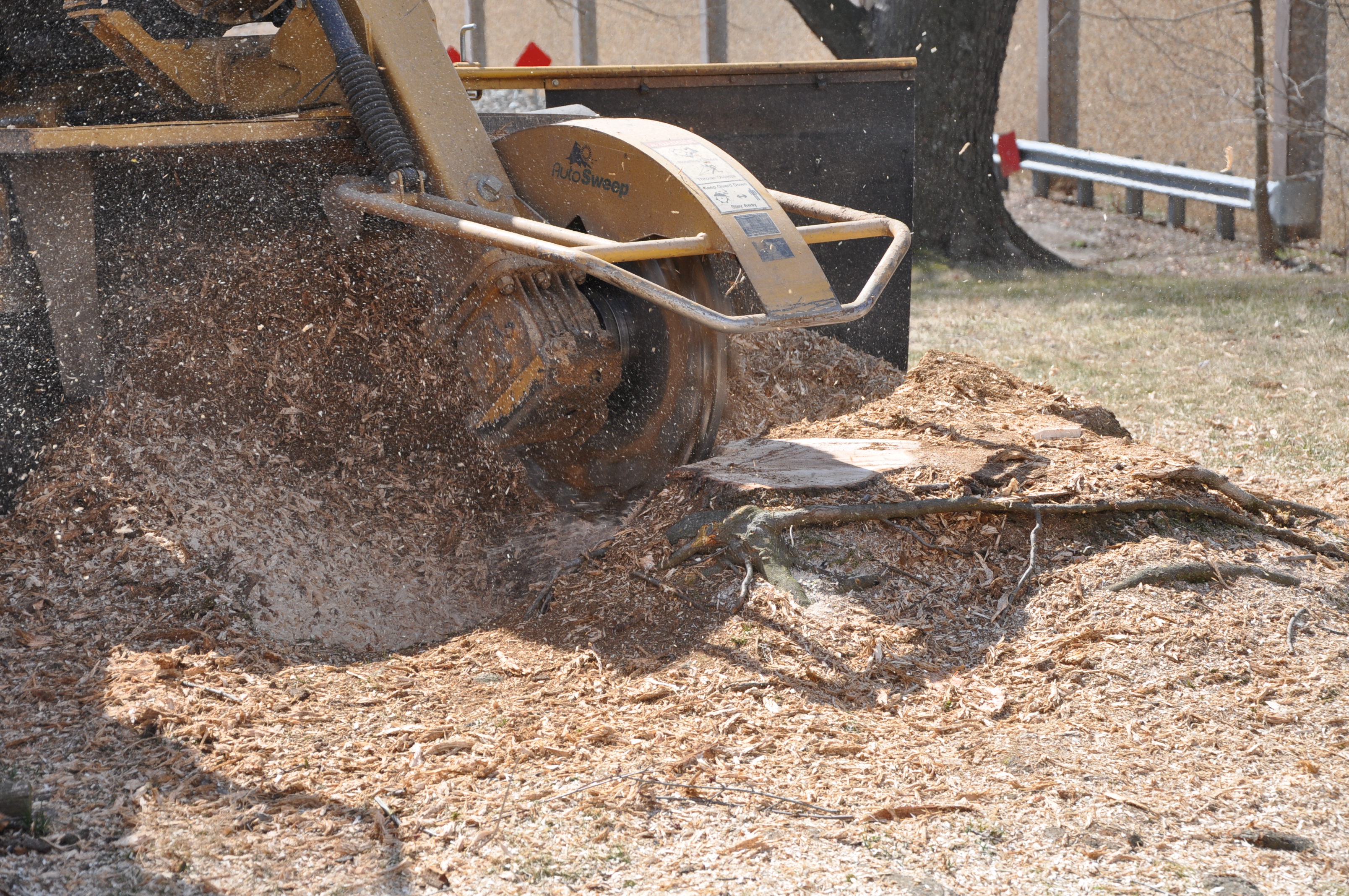
Not every dying tree looks dead. In fact, at Ed’s Tree Service, some of the most dangerous trees we remove in Maryland looked perfectly fine to homeowners just weeks before they failed. After nearly 40 years serving this region, we’ve learned that tree failure rarely happens without warning. The problem is that most of those warnings are easy to miss if you don’t know what to look for. This guide will help you spot the hidden signs that your tree may be in decline, so you can protect your property and family before a storm turns a concern into an emergency.
Why Trees Hide Their Problems: Insights from Maryland Tree Service Experts
Trees are remarkably good at concealing structural problems and internal decay. Unlike a broken fence or a cracked foundation, tree damage often happens inside the trunk or high in the canopy where you can’t see it from the ground. According to Kew Gardens’ guide on how to health check a tree, a tree can lose significant structural integrity while still producing leaves each spring, which is why so many homeowners are caught off guard when a seemingly healthy tree suddenly drops a major limb or topples during a storm.
Understanding how trees fail helps you become a better observer of your own landscape. Trees don’t usually collapse overnight. They give signals over months or even years, but those signals require a trained eye or at least a homeowner who knows what to watch for.
The Warning Signs You Can See From Your Yard
Let’s start with what you can spot during a walk around your property. These are the visual cues that tell us a tree needs professional assessment.
Dead or Broken Branches May Need Emergency Branch Removal
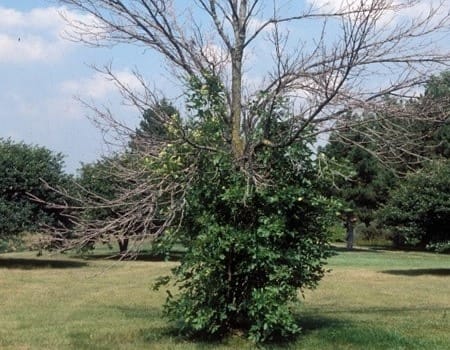
One or two small dead twigs aren’t cause for alarm, but multiple dead branches scattered through the crown, especially large ones, suggest the tree is under stress. We call these “widow makers” in the industry because they can drop without warning. According to the International Society of Arboriculture’s Best Management Practices for Tree Risk Assessment, if you’re seeing several dead limbs, particularly if they’re larger than two inches in diameter, that tree needs an arborist’s attention. If you notice hazardous branches that need immediate attention, emergency branch removal can prevent serious property damage.
Cracks and Splits in the Trunk or Major Limbs
Vertical cracks that run up and down the trunk are serious red flags. These often indicate internal structural failure or severe storm damage. Deep splits where the bark has separated from the wood underneath signal that the tree is losing its ability to transport water and nutrients. According to the International Society of Arboriculture’s Tree Risk Assessment guidelines, any crack that extends through the bark and into the wood should be evaluated by a certified arborist, as these can rapidly progress to complete failure.
 Fungal Growth or Mushrooms at the Base
Mushrooms growing at the base of your tree or on the trunk aren’t just unsightly. They’re the fruiting bodies of fungi that are actively decomposing the wood inside your tree. By the time you see mushrooms, significant internal decay has already occurred. The Tree Care Industry Association’s ANSI A300 standards note that bracket fungi, shelf fungi, and conks are particularly concerning because they indicate advanced wood rot that compromises structural stability.
Leaning That Wasn’t There Before
Trees can lean naturally and live long, healthy lives. What matters is whether that lean is new or increasing. If your tree has started leaning after a storm, or if you notice the lean is getting worse year over year, the root system may be failing. According to Kew Gardens’ tree health assessment guide, look for soil mounding or cracking on the opposite side of the lean, as these are signs that roots are pulling up and the tree could topple.
Root Problems You Can Spot
Exposed roots that show decay, mushrooms growing near the root flare, or roots that have been damaged by construction or lawn equipment all compromise a tree’s stability. The Tree Care Industry Association’s ANSI A300 standards emphasize that root health directly correlates with overall tree stability, and root damage is one of the leading causes of tree failure in urban and suburban settings.
When Maryland Tree Care Experts Should Assess Your Trees
Some failure indicators require closer inspection and experience to interpret correctly. That’s where we come in.
Cavities and Hollows
A hollow tree isn’t necessarily a dead tree, but it is a weaker tree. The question becomes how much sound wood remains and whether that’s enough to support the tree’s weight and withstand wind loads. According to the ISA’s Best Management Practices, we use specialized tools and visual assessments to determine whether a hollow can be managed or whether removal is the safer choice.
Bark Abnormalities
Missing bark, loose bark, or bark that peels away easily can indicate disease, pest infestation, or internal decay. The Mid-Atlantic Chapter ISA’s regional guidelines note that cankers (sunken or swollen areas of dead bark) disrupt the flow of nutrients and can girdle a branch or even the entire trunk if they encircle it.
Poor Branch Architecture
Branches that grow with tight V-shaped crotches rather than U-shaped angles are prone to splitting. According to the Tree Care Industry Association, co-dominant stems (where the trunk divides into two leaders of equal size) create weak points that can fail under stress. These structural issues may have been present for years, but they become more dangerous as the tree grows larger and heavier.
When to Call a Professional Maryland Tree Removal Company

It’s hard to tell from the ground whether that dead branch is just a cosmetic issue or part of a larger pattern of decline. We understand that uncertainty, and we’re here to help you make informed decisions about your trees.
You should schedule a professional tree risk assessment if you notice any of the following:
- Multiple warning signs appearing together (dead branches plus fungal growth, for example)
- Large dead or hanging branches over structures, driveways, or areas where people gather
- Recent storm damage that’s left visible cracks, splits, or leaning
- Construction or grading work that occurred near the tree’s root zone within the past few years
- Sudden changes in leaf color, leaf size, or leaf density compared to previous years
- Trees located near power lines, homes, or high-traffic areas where failure would cause significant property damage or risk to safety
According to the Mid-Atlantic Chapter ISA guidelines, regular tree assessments by certified arborists help identify risks before they become emergencies, particularly in our region where ice storms, high winds, and heavy wet snow create significant load stresses on tree canopies. If you’re in the DMV metro area and notice serious damage, our Bethesda and Chevy Chase emergency tree service experts are available to respond quickly.
How Maryland Weather Events Accelerate Hidden Problems
A tree that’s been slowly declining for years can go from stable to dangerous after a single severe weather event. Ice accumulation adds tremendous weight to branches, high winds test every weak point in the structure, and saturated soil reduces root anchorage. According to OSHA’s tree care safety resources developed in alliance with TCIA, the period immediately following major storms sees a significant increase in tree-related injuries and property damage, much of it from trees that had pre-existing structural defects that went unnoticed until the storm exposed them. This is why Ed’s Tree Service provides storm damage tree removal services in Maryland to protect home and families.
We recommend scheduling assessments after major weather events if you have large trees near your home, even if you don’t see obvious damage. Sometimes the damage is internal or high in the canopy where you can’t see it without climbing equipment.
Key Takeaways
- Trees can look healthy while hiding serious structural problems inside the trunk or high in the canopy
- Dead branches, cracks, fungal growth, new or increasing leans, and root problems are all red flags that warrant professional assessment
- Tree risk assessment by a certified arborist evaluates likelihood of failure, likelihood of impact, and consequences to determine appropriate action
- Certain tree species common in Maryland and DC are more prone to structural failure and require more frequent monitoring
- Major weather events can turn a slowly declining tree into an immediate hazard overnight
- Proactive assessment and maintenance are always safer and more cost-effective than emergency removal after failure
Frequently Asked Questions
How often should I have my trees professionally inspected?
The International Society of Arboriculture recommends annual inspections for high-value trees or trees with known defects, and assessments every 2-3 years for healthy mature trees in low-risk locations. After nearly 40 years serving Maryland and DC, we typically suggest annual inspections for large trees over structures or high-traffic areas.
Can a tree with a hollow trunk still be safe?
Yes, depending on how much sound wood remains and the tree’s location. The Tree Care Industry Association’s ANSI A300 standards note that trees can tolerate significant hollowing if the remaining shell of sound wood is thick enough to support the weight and wind loads. A certified arborist can measure the remaining wall thickness and calculate whether it meets safety thresholds, or whether the tree should be removed or reduced in height to lower risk.
What’s the difference between a tree that needs pruning and one that needs removal?
Pruning removes specific branches to improve structure, reduce risk, or eliminate dead wood, while the tree itself remains healthy and stable. Removal becomes necessary when the main trunk is compromised, when decay is too extensive, when the root system is failing, or when the cost and risk of maintaining a declining tree outweigh its benefits. According to ISA Best Management Practices for Tree Risk Assessment, the decision between pruning and removal depends on whether the defects can be adequately mitigated through pruning or cabling, or whether the structural integrity is too compromised to manage safely.
How quickly can a healthy-looking tree become hazardous?
The timeline varies significantly based on the cause of decline. Pest infestations like emerald ash borer can kill a tree within 2-4 years, while heart rot may develop over decades. Storm damage can create immediate hazards overnight. The Mid-Atlantic Chapter ISA emphasizes that regular monitoring is key because some decline is gradual and manageable, while other situations deteriorate rapidly and require urgent response.
Tree Care Experts in MD for Emergency Tree Removal
If you’re looking at a tree in your yard right now and wondering whether those dead branches or that crack in the trunk is something to worry about, let us take a look. At Ed’s Tree Service, we offer free estimates for tree removal services and emergency tree removal services throughout Maryland and DC. Our certified arborists have seen just about every tree problem this region can throw at us, and we’ll give you straight answers about what needs to be done and what can wait.
We’ve been part of this community for nearly 40 years because we treat every property like it’s our own and every homeowner’s concern as valid and worth our time. Let us show you what we see and help you make the best decision for your property and your peace of mind.
Contact Ed’s Tree Service today
Sources
- International Society of Arboriculture: Best Management Practices – Tree Risk Assessment, https://www.isa-arbor.com/
- Tree Care Industry Association: ANSI A300 Standards for Tree Care Operations, https://treecareindustryassociation.org/
- Mid-Atlantic Chapter ISA: Regional Tree Assessment Guidelines, https://www.mac-isa.org/
- Kew Gardens (Royal Botanic Gardens): How to Health Check a Tree, https://www.kew.org/read-and-watch/how-to-health-check-your-tree
- OSHA Tree Care Safety Resources: OSHA-TCIA Alliance Materials, https://www.osha.gov/alliances/tcia/tcia