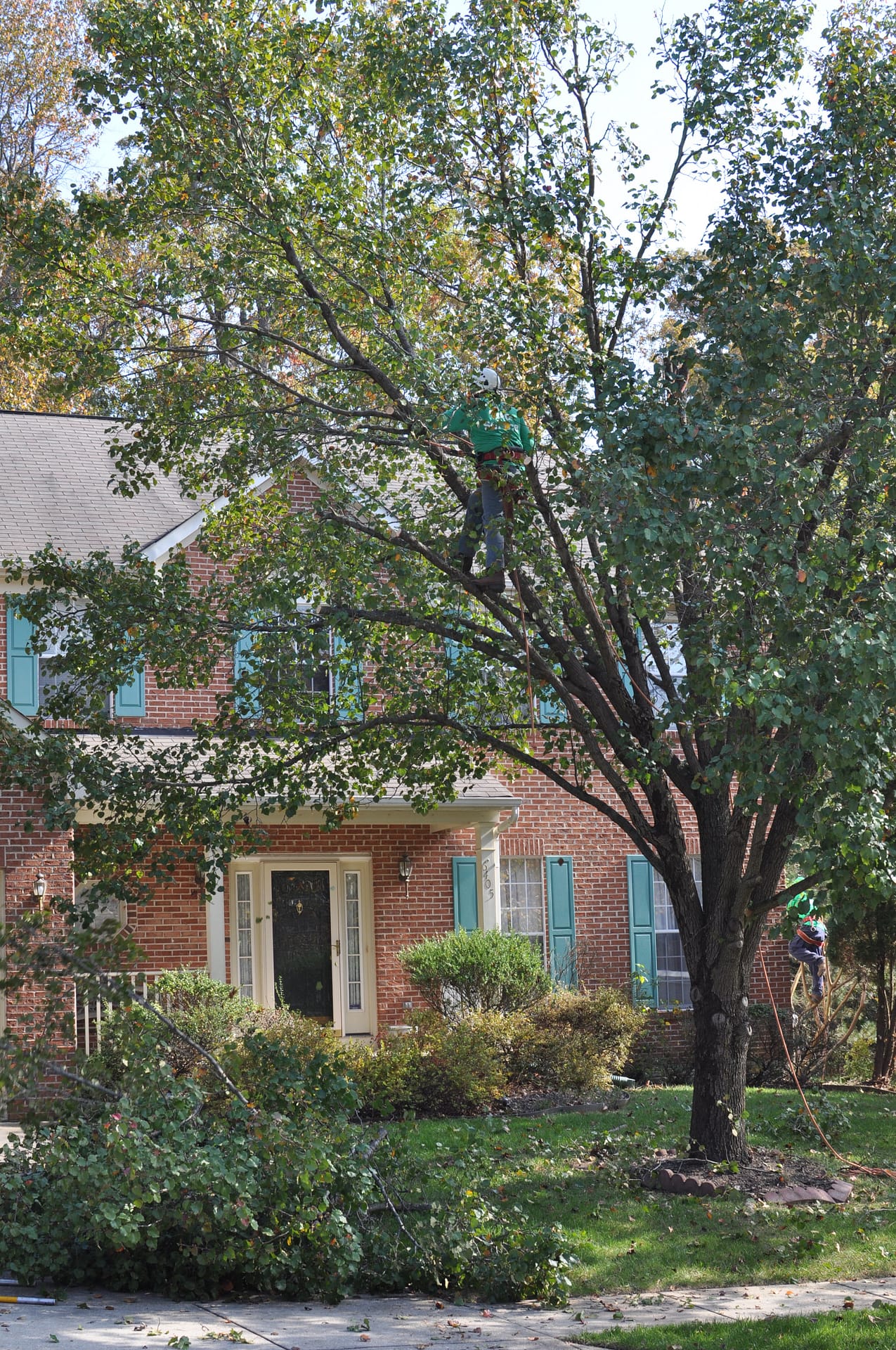
A fallen tree catches most homeowners off guard. What you do in the first few hours after it comes down can affect your safety, your insurance claim, and the cost of cleanup. Here is what Maryland homeowners need to know.
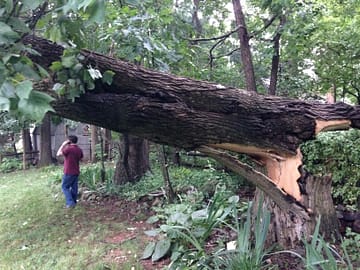 Safety First: What to Do Right After a Tree Falls on Your Property
Get everyone away from the tree immediately. A fallen tree can shift, especially if it is resting against a structure or another tree. If it has come into contact with power lines, keep everyone clear and call your utility company before doing anything else. Treat every line as live until the utility company confirms otherwise.
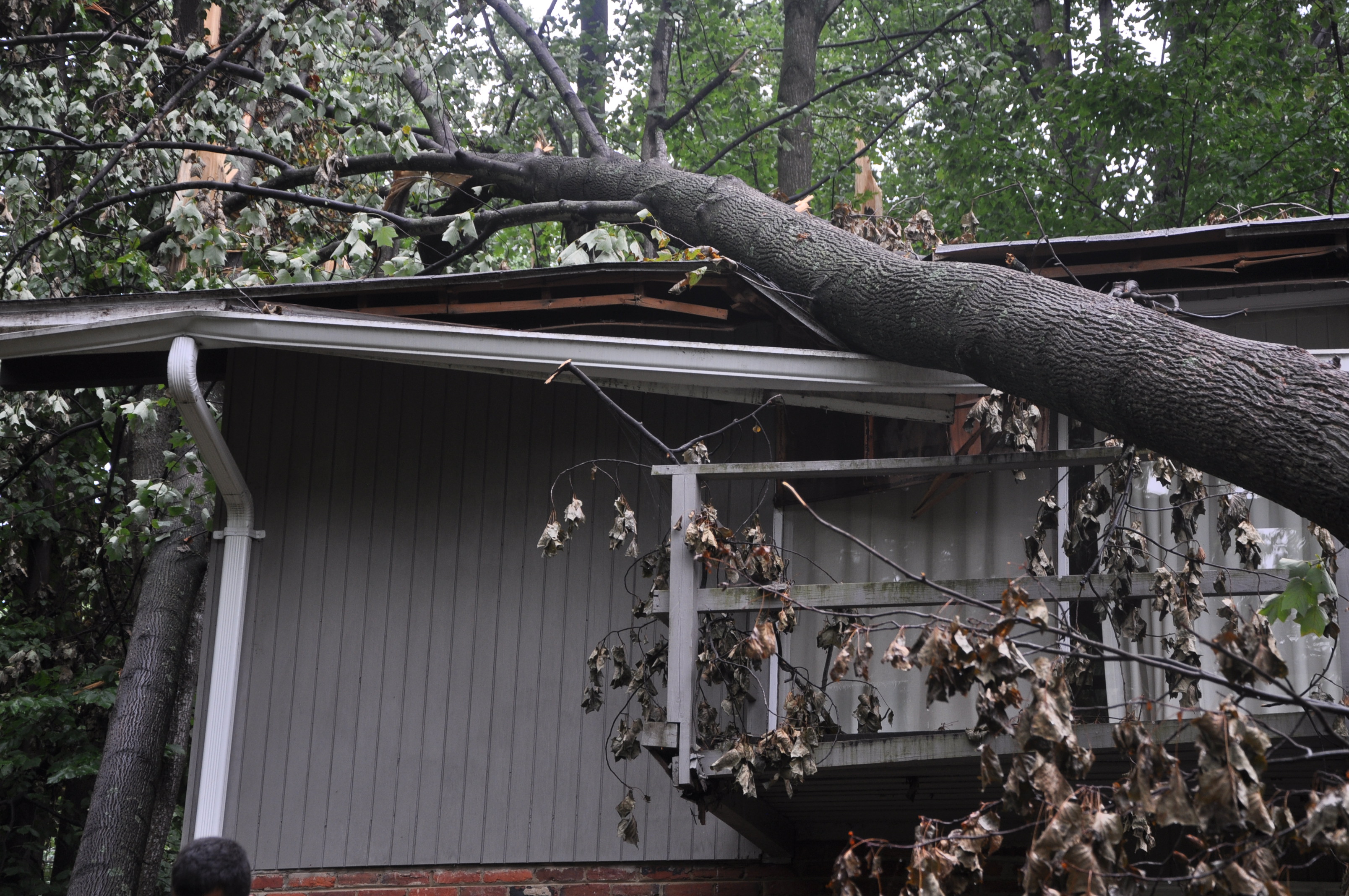
If the tree has damaged your roof or opened up your home, do not reenter until you know the structure is stable. Cover any openings with a tarp to limit water intrusion while you wait for a professional assessment.
Document the Damage Before Cleanup Begins
Once everyone is safe, document everything before any cleanup or removal starts. According to the Insurance Information Institute, homeowners insurance typically covers damage caused by a tree falling due to a covered peril such as a storm or wind, but that coverage depends on solid documentation. Photograph the full length of the tree, the point of impact, all structural damage, and the base of the tree. If the tree was visibly dead or diseased before it fell, the Insurance Information Institute notes that poor maintenance is not covered, and your claim may be denied. Once cleanup begins, that evidence is gone.
Contact Your Insurance Company
Call your insurer as soon as the immediate situation is under control. Ask what your policy covers for tree removal and structural repairs. The Insurance Information Institute notes that most policies cover removal costs when a tree hits an insured structure, typically up to $500 to $1,000 depending on the policy.
Hiring Tree Removal Professionals in Maryland
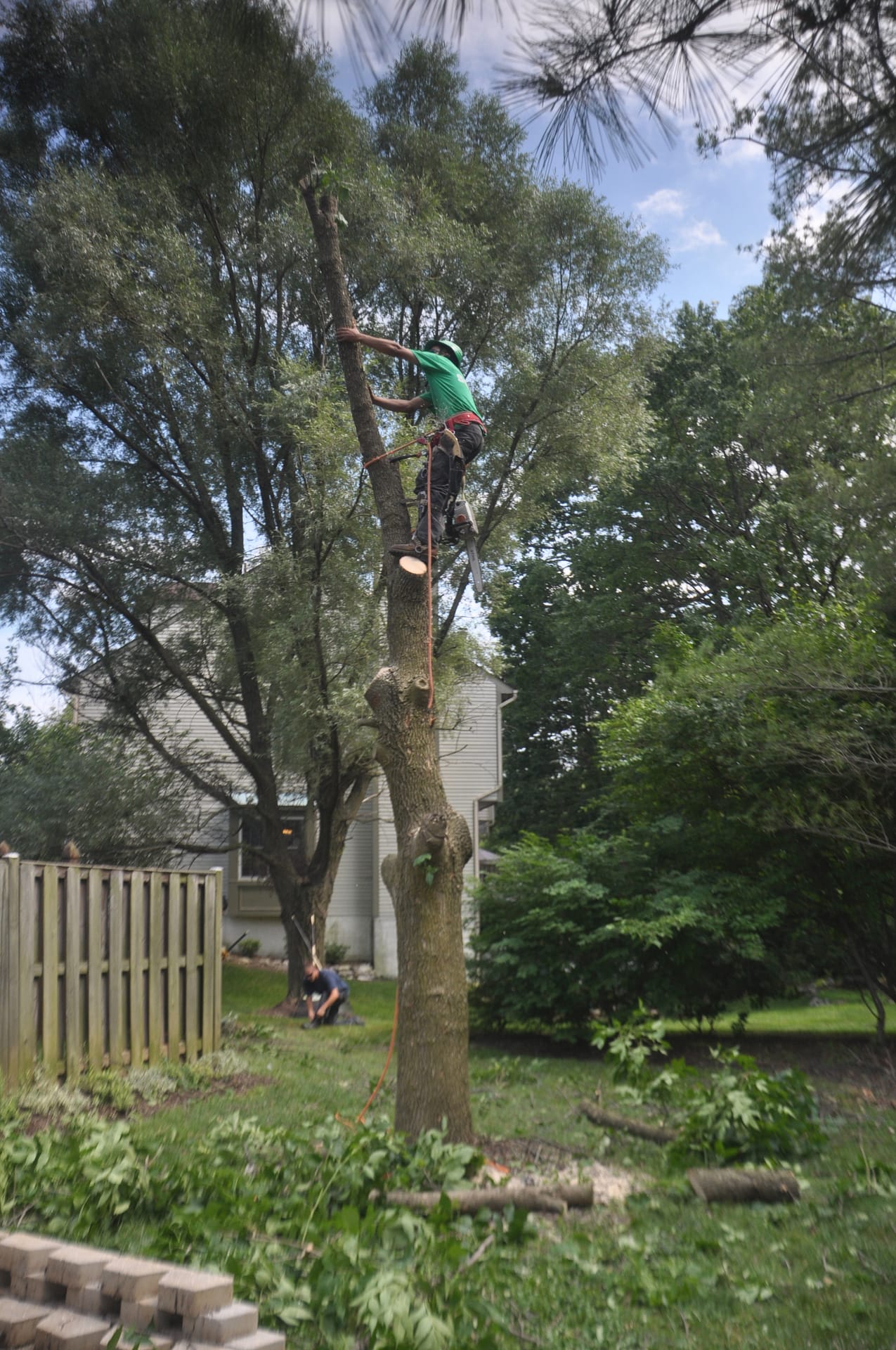
Once documentation is complete and your insurer has been notified, call licensed tree removal professionals in Maryland to handle the removal. A tree resting against a structure or tangled in other trees is not a DIY situation. It requires proper equipment and training to remove safely.
When evaluating tree care services in MD, verify that the company is licensed and insured before any work begins. The Tree Care Industry Association advises homeowners to request written proof of insurance and a detailed estimate before signing anything. Be cautious of contractors who show up unsolicited after a storm and pressure you to decide quickly.
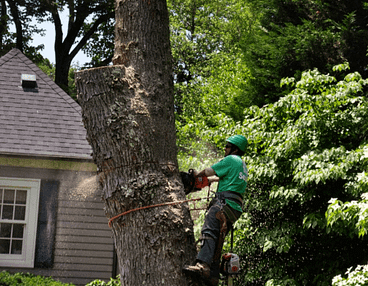
For trees on structures, most licensed providers offer emergency response. A Chevy Chase emergency tree service call typically begins with an on-site assessment, followed by a removal plan that accounts for what the tree is resting on. The International Society of Arboriculture sets professional standards for this type of work, and experts are trained specifically in hazard assessment and safe removal.
Key Takeaways
- Get everyone away from the tree immediately and treat any downed power lines as live until your utility company confirms otherwise.
- Document all damage thoroughly before cleanup begins, as this directly supports your insurance claim.
- Homeowners insurance typically covers removal when a tree hits an insured structure but generally does not cover removal when no structure was damaged.
Frequently Asked Questions About Tree Removal in Maryland
Does homeowners insurance cover tree removal if the tree did not hit my house?
Generally, homeowners insurance does not cover removal when a tree falls in your yard without hitting an insured structure. The Insurance Information Institute notes that coverage for debris removal typically applies only when the tree has damaged your home, a detached garage, or another insured structure, or when the tree is blocking a driveway or a ramp designed to assist a person with a disability.
My neighbor’s tree fell on my property. Who is responsible?
In most cases, your own homeowners insurance covers the damage regardless of whose tree it was. The Insurance Information Institute explains that if the tree was healthy and fell due to a storm, your neighbor is generally not liable. However, if the tree was visibly dead or diseased and your neighbor failed to address it, negligence may apply. Document the condition of the tree before any cleanup begins.
Can I remove a fallen tree myself?
Small trees that have fallen in an open area away from structures and power lines may be manageable for a homeowner with the right tools. Any tree resting against a structure, tangled in other trees, or near power lines should be handled by tree removal professionals in Maryland. The Tree Care Industry Association recommends calling a professional when there is any doubt about safety.
A Note From Ed’s Tree Service
Ed’s Tree Service has been responding to tree emergencies across Maryland and the DC area since 1987. We are licensed, insured, and available for emergency calls when trees fall on structures or create immediate hazards.