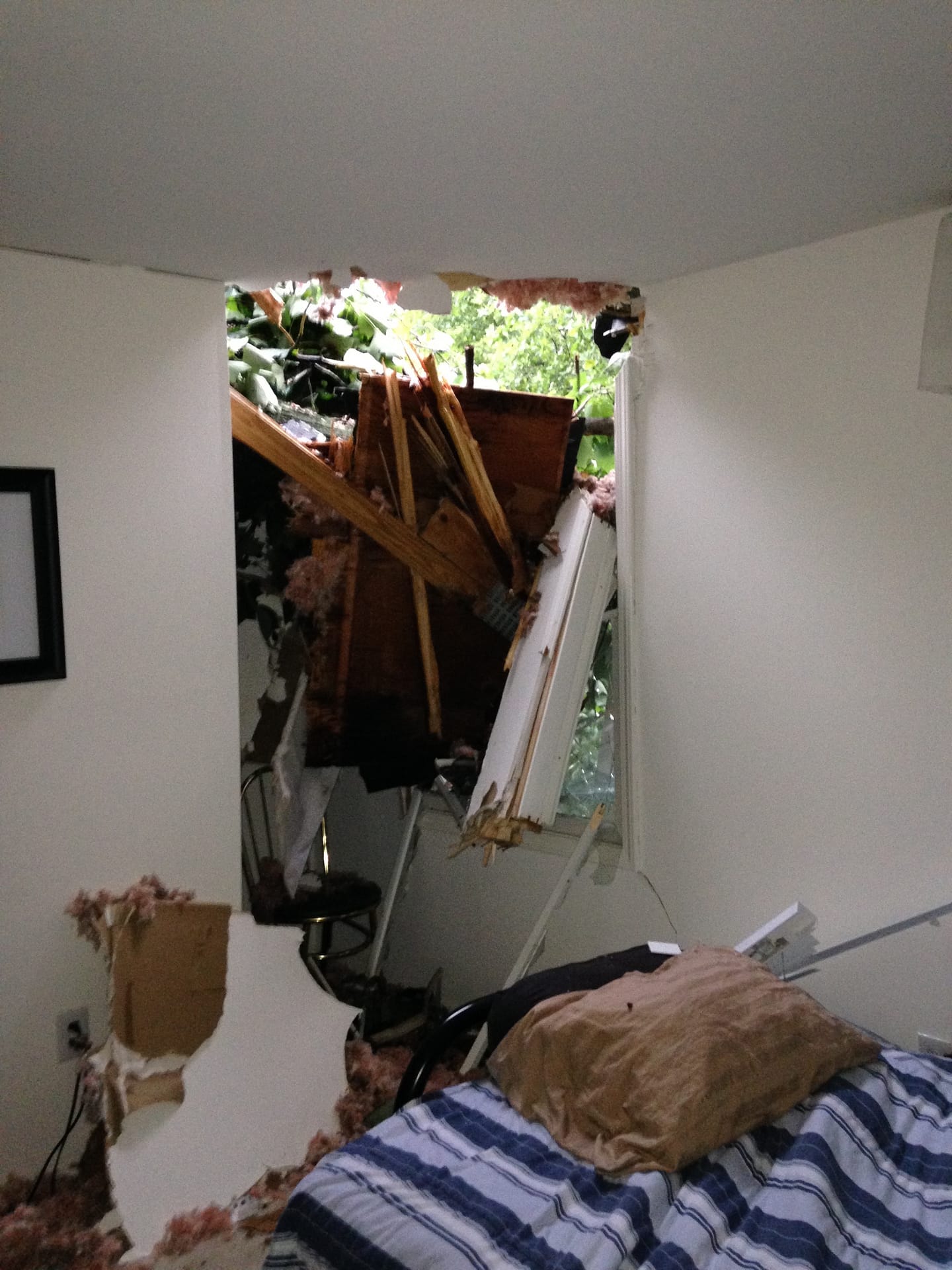
Winter storms in Maryland bring beautiful snow-covered landscapes, but they also pose serious risks to your trees and property. Our region’s unique climate creates perfect conditions for destructive ice storms, with temperatures that fluctuate above and below freezing throughout the winter months. When ice builds up on branches, even a half-inch coating can add hundreds of pounds of weight to a tree’s canopy, causing limbs to snap and fall without warning. Property damage from falling branches can include crushed vehicles, damaged roofs, destroyed fences, and downed power lines.
The good news is that with proper preparation, you can significantly reduce the risk of tree damage, property loss, and safety concerns. This guide from Ed’s Tree Service, a trusted woman-owned tree care company serving Maryland and DC for nearly 40 years, will walk you through everything you need to know about protecting your trees before winter weather arrives.
Understanding Ice and Snow Damage: What Every Maryland Homeowner Should Know
Ice storms pose a unique threat to trees because of the sheer weight ice adds to branches and crowns. According to research from the USDA Forest Service, just a half-inch of ice accumulation can add 500 pounds or more to a tree’s canopy. When you consider that ice often builds up to an inch or more during severe winter storms in our region, the structural stress becomes enormous. Branches that seem perfectly healthy in summer can snap under this unexpected load, especially when combined with wind.
Here’s what makes Maryland particularly vulnerable. Our climate zone experiences frequent freeze-thaw cycles throughout winter, which creates a damaging pattern for tree structure. When temperatures rise during the day and water enters cracks or weak points in the wood, that moisture expands when it refreezes at night. Over time, this cycle widens existing cracks, weakens branch attachments, and compromises overall tree integrity. Trees that might have survived one ice storm can fail during the next because of cumulative damage from these temperature swings.
Snow load creates different challenges, particularly for evergreens and trees with broad, spreading crowns. Heavy wet snow can accumulate on branches that retain their foliage year-round, adding significant weight and causing branches to bend or break.
Understanding why some trees fail while others remain standing comes down to structural integrity and species characteristics. Trees with strong, well-spaced branch attachments, proper pruning history, and good overall health can typically withstand significant ice and snow loads. Conversely, trees with structural defects like included bark, co-dominant stems, or previous storm damage are much more likely to experience failure. The USDA Forest Service notes that hardwood species vary widely in their ice storm resistance, with some like oak and hickory generally performing better than others like silver maple or Bradford pear.
Identifying Weak Branches and Structural Problems
You don’t need to be an arborist to spot many of the warning signs that indicate a tree has structural problems. Start by looking for dead wood, which appears dry, brittle, and lacks the flexible feel of living branches. Dead branches often have no buds, peeling bark, or they may already be cracked and hanging. These are the first candidates for removal before winter storms arrive because they have no structural strength and will fail under even moderate ice loads.
Look for obvious cracks, splits, or separations in the trunk or major branches. These defects indicate that the wood has already begun to fail and will only worsen under the stress of ice accumulation. Pay attention to seasonal leaf patterns as well. If a branch leafed out late in spring, had sparse foliage during summer, or dropped leaves early in fall, it’s telling you that something is wrong with that part of the tree. Weak or dying branches show these symptoms because they’re not receiving adequate water and nutrients.
Emergency Branch Removal: Warning Signs
Certain structural characteristics indicate that branches need immediate attention before winter weather arrives. V-shaped branch attachments, where two stems form a narrow angle at their connection point, are inherently weaker than U-shaped attachments with wider angles. According to the International Society of Arboriculture’s structural pruning standards, V-shaped crotches are more prone to splitting because bark can become included between the stems, preventing strong wood-to-wood connection.
Co-dominant stems, where two main leaders compete for dominance, create similar structural concerns. When these stems are roughly equal in size and have included bark at their union, they’re essentially two trees trying to grow from the same point. Under ice load, these unions can split catastrophically, often taking down large portions of the tree. If you see this pattern in your trees, especially near your home or power lines, professional assessment is critical.
Overextended branches that reach toward structures, utility lines, or high-traffic areas pose immediate risks during winter storms. Even healthy branches can fail when they’re growing at awkward angles or extending far beyond the natural crown shape. Trees with broad, spreading crowns that collect more surface area for ice accumulation need special attention. We understand it’s hard to assess whether these branches will hold up under ice load, which is why professional evaluation before winter is so valuable.
When to Call a Tree Care Service MD Professionals Trust
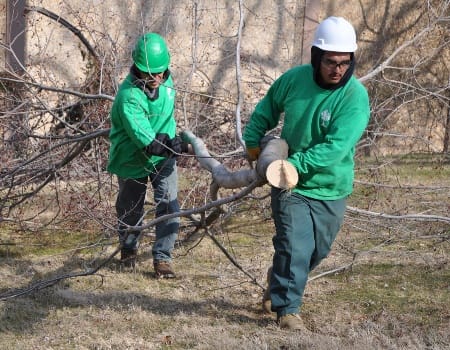
It’s hard to assess tree health from the ground, we understand. What looks like a minor crack from 30 feet away might be a major structural defect that threatens your entire tree. Professional arborists use specialized equipment to climb trees safely and inspect branch attachments, decay, and structural issues that simply aren’t visible from ground level. We can detect hollow areas by tapping on the trunk, identify early-stage decay by examining bark patterns, and assess whether a crack extends through the entire branch or just the surface.
Certified arborists also understand species-specific vulnerabilities and how Maryland’s climate affects different trees. We know which trees in your yard are most at risk during ice storms based on their species, age, and growing conditions. Many tree care companies, including Ed’s Tree Service, offer free assessments to help homeowners understand their trees’ condition and make informed decisions about preventative care. Taking advantage of these assessments before winter arrives gives you time to address problems on your schedule rather than in an emergency situation.
Preventative Tree Care Services to Protect Your Property
Tree Cutting Maryland: The Right Time for Winter Pruning
Late fall and early winter provide the ideal window for preventative tree pruning in Maryland. According to the Arbor Day Foundation, dormant season pruning offers multiple advantages over pruning during the growing season. When trees are dormant, their structure is fully visible without foliage blocking your view of branch attachments and defects. This visibility allows arborists to make better decisions about which branches to remove and how to shape the tree for optimal storm resistance.
Dormancy also means less stress on the tree. When trees aren’t actively growing, pruning wounds don’t have to compete with new growth for the tree’s energy reserves. The risk of disease transmission drops significantly in winter because most pathogens and insects are inactive in cold weather. For Maryland trees, the pruning window typically runs from late November through early March, after leaves have fallen but before spring bud break begins.
Certified arborists understand proper cutting techniques that promote healing, know how to maintain the tree’s natural shape while removing hazards, and have the equipment to safely remove large branches without damaging property.
Services That Prevent Storm Damage: Your Professional Tree Care Company in Maryland
Crown thinning is one of the most effective preventative services for reducing ice storm damage. By selectively removing branches throughout the canopy, arborists reduce the overall surface area where ice can accumulate while maintaining the tree’s natural shape and health. Proper crown thinning follows ISA best practices to remove no more than 25 percent of the living crown and targets branches that pose the highest risk.
Structural pruning for young trees establishes strong branch architecture that will serve the tree throughout its life. By identifying and correcting problems like co-dominant stems, poor branch angles, and competing leaders early, we set up trees to resist storm damage for decades. Removing dead, diseased, or damaged limbs eliminates the most obvious failure points and prevents decay from spreading to healthy wood.
Emergency removal becomes necessary when a tree poses immediate danger due to severe lean, major structural failure, or proximity to critical structures. After nearly 40 years serving Maryland and DC, we’ve developed the expertise to evaluate when a tree can be saved with proper care versus when removal is the safer choice.
Tree Preparation Timeline for Maryland Homeowners
| Task | Best Timing | Why It Matters |
|---|---|---|
| Professional tree assessment | September – October | Identifies problems before winter and allows time for scheduled pruning |
| Deadwood and hazard removal | October – November | Eliminates most likely failure points before ice season begins |
| Structural pruning | November – February | Dormant trees experience less stress and full visibility of structure |
| Deep watering | October – November (before ground freeze) | Hydrated trees are more resilient to cold stress and branch damage |
| Documentation and photos | November | Provides baseline for insurance claims if storm damage occurs |
Storm Safety: What to Do When Winter Weather Hits Maryland
We know it’s tempting to try to help your trees during a storm, but patience is often the safest approach. Here’s what you should and shouldn’t do when ice and snow are actively falling or have already accumulated on your trees.
DO gently brush snow upward from branches using a soft broom or your hands. Use an upward sweeping motion to avoid pulling branches downward, which can cause more damage. Only do this for branches you can safely reach from the ground.
DON’T attempt to remove ice from branches or beat on them to knock ice loose. Ice-covered branches are extremely brittle and breaking them can cause permanent damage to the tree. Ice will melt naturally when temperatures rise, and trying to speed this process usually causes more harm than good.
DO gently support small trees that have bent under snow load, but don’t try to force them back into their original position. Bent branches and trunks may spring back on their own as snow melts. If they don’t, professional assessment can determine whether the tree can recover.
DON’T stand under or walk near damaged branches, especially during thaw periods when ice is melting. Branches can fall suddenly without warning as ice shifts or releases. Keep children and pets away from damaged trees until they’ve been professionally evaluated.
DO call professionals immediately if trees or branches have fallen on power lines. Never attempt to move branches that are touching electrical wires. Contact your utility company first, then call a tree service to handle removal once power lines are secured.
DON’T attempt DIY removal of large branches or trees that have failed. Tension in broken branches can cause them to spring back violently when cut. Professional arborists have the training and equipment to safely remove storm-damaged trees and branches.
Schedule Your Winter Tree Care Service in MD
Don’t wait until ice is weighing down your branches to think about tree safety. Ed’s Tree Service has been protecting Maryland and DC properties for nearly 40 years, and we understand exactly what our region’s winter weather can do to unprepared trees. Our certified arborists provide free assessments to help you understand your trees’ condition and make informed decisions about preventative care that fits your budget and priorities.
Whether you need a simple hazard assessment, comprehensive preventative pruning, or emergency services when winter storms hit, we’re here to help Maryland and DC families keep their properties safe. As a family-owned and woman-owned business, we treat your trees and property with the same care we’d give our own. Our team has the expertise, equipment, and local knowledge to handle everything from routine maintenance to complex removals.
Contact Ed’s Tree Service today to schedule your pre-winter tree assessment. We’ll evaluate your trees, explain any concerns in plain language, and provide honest recommendations about what needs attention now versus what can wait. Let us help you protect your landscape investment and give you peace of mind before the next ice storm arrives.
Frequently Asked Questions
When is the best time to schedule tree care service in Maryland for winter preparation?
The best time to schedule winter preparation is September through October for assessment and October through November for actual pruning and hazard removal. According to the USDA Climate Hubs, maintaining trees and removing hazards before winter weather arrives significantly reduces the severity and extent of ice and wind damage. Scheduling early gives you flexibility to address problems on your timeline rather than competing with other homeowners for emergency services during or after storms hit.
Can I prune my own trees before winter, or should I hire a tree care company in Maryland?
Homeowners can safely handle small branches under two inches in diameter that can be reached from the ground with hand pruners, but anything larger or higher requires professional help. The International Society of Arboriculture notes that improper pruning cuts can actually increase storm damage risk by creating weak regrowth and providing entry points for decay organisms. Professional arborists understand proper cutting techniques, maintain natural tree shape, and have the equipment to work safely at height without damaging property or risking injury.
Sources
USDA Forest Service – Ice Storms and Forest Impacts
https://www.fs.usda.gov/rm/pubs/rmrs_gtr292/2000_irland.pdf
USDA Forest Service – Impacts and Management Implications of Ice Storms
https://www.srs.fs.usda.gov/pubs/ja/ja_bragg011.pdf
USDA Forest Service – Hardwood Crown Injuries Following Ice Storms
https://www.nrs.fs.usda.gov/pubs/gtr/gtr_nrs60.pdf
USDA Climate Hubs – Maintain Trees and Remove Hazards
https://www.climatehubs.usda.gov/approach/maintain-trees-and-remove-hazards-reduce-severity-or-extent-wind-and-ice-damage
International Society of Arboriculture – Pruning Standards
https://auf.isa-arbor.com/content/5/10/239
ISA – Structural Pruning Best Practices
https://wwv.isa-arbor.com/events/conference/proceedings/2013/GILMAN_Structural%20Pruning.pdf
Arbor Day Foundation – Dormant Season Pruning
https://www.arborday.org/perspectives/arborist-advice-why-should-you-prune-your-trees-during-dormant-season
Arbor Day Foundation – Caring for Trees After Winter Storms
https://www.arborday.org/perspectives/caring-your-trees-after-heavy-snowfall