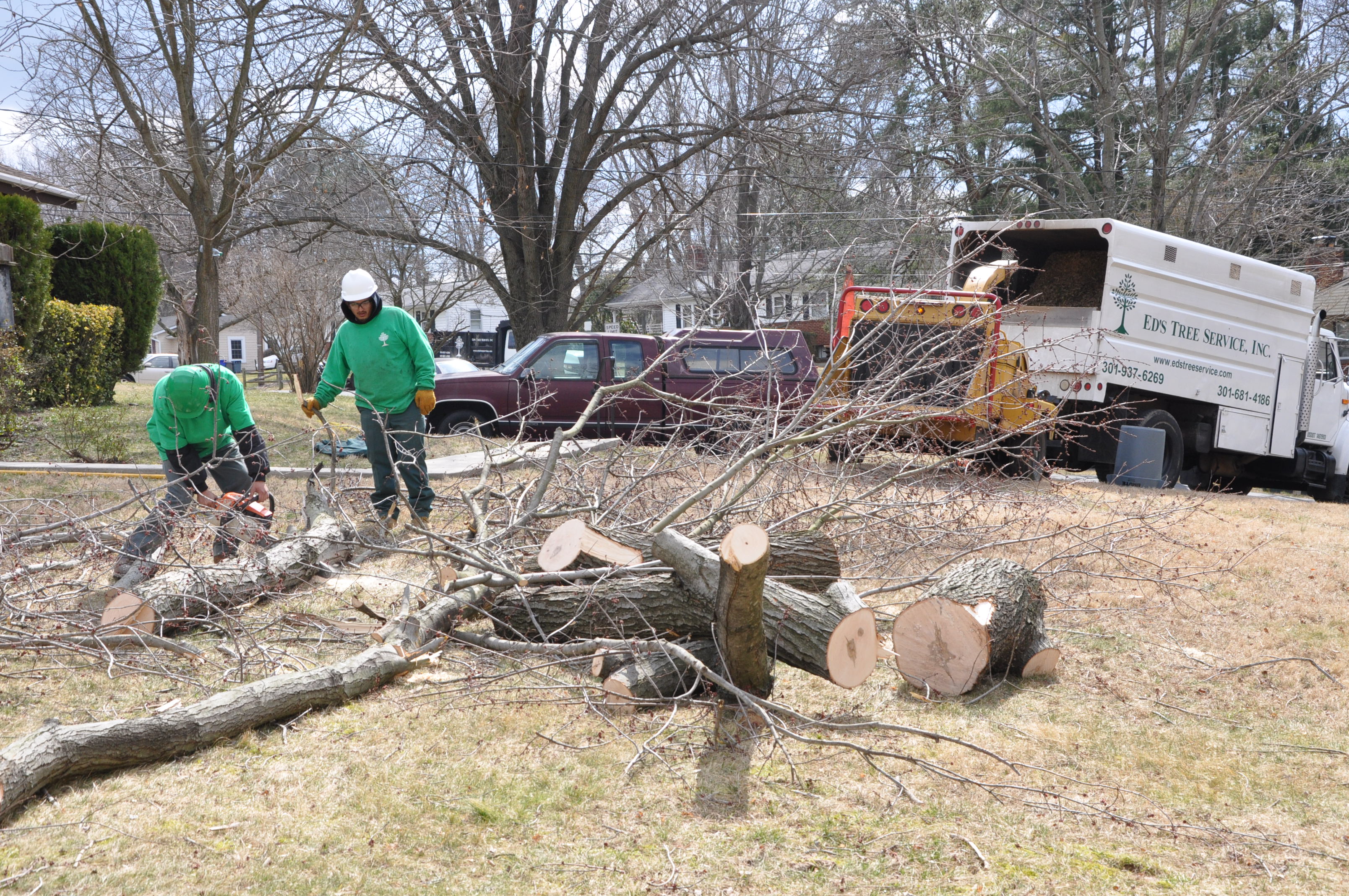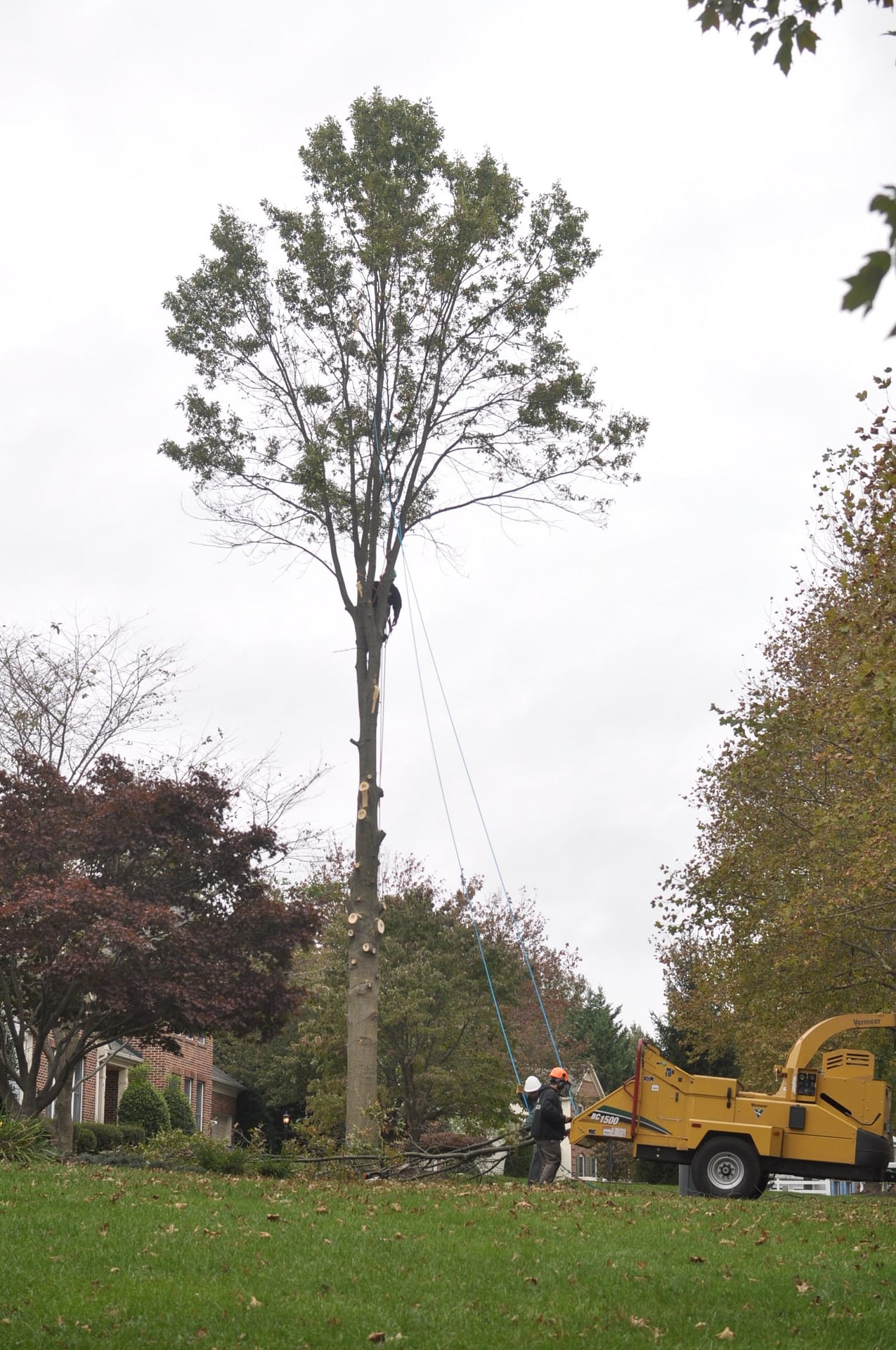
Most homeowners assume a tree on their property is theirs to deal with. Usually that is true. The exceptions are the ones that cost people money, and they tend to surface after the tree is already down.
Whether you need a permit depends on three things: which jurisdiction you are in, exactly where the tree stands relative to your property line, and in some places how big it is. The rules are not intuitive, and they differ meaningfully between Montgomery County, the District, Arlington, and Fairfax.
Here is how it works across our service area, plus why fall is the practical season to start a Maryland tree removal you want finished before winter. Permits are the first thing most homeowners ask about when they start looking for a Bethesda tree removal company, and the Montgomery County section below covers that case specifically.
First Question: Is the Tree Removal in Maryland Actually Needed on Your Property?
This is where most surprises begin. The strip of grass between a sidewalk and the street usually belongs to the public road right-of-way, not the homeowner, even though the homeowner mows it. A tree standing there is a roadside tree and it is regulated, regardless of who planted it.
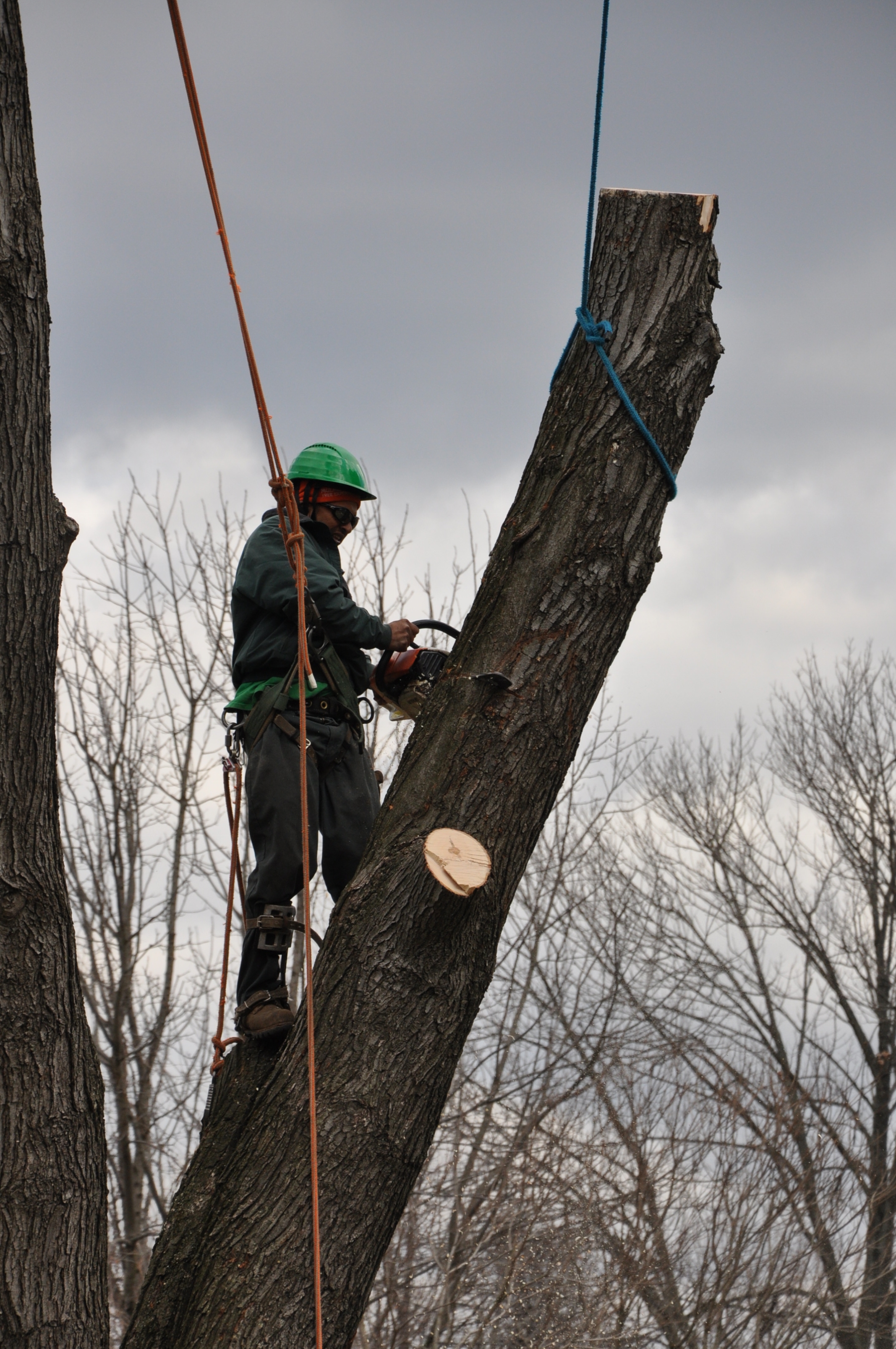
In Maryland this is governed statewide. The Maryland Roadside Tree Law, administered by the DNR Forest Service, covers planting, pruning, and removal of any tree growing within a public road right-of-way. Anyone doing that work, whether a homeowner, a business, a municipality, or a utility, needs a permit first. Commercial roadside tree work has to be performed under the direction of a Maryland Licensed Tree Expert. Unauthorized work can bring fines and restoration requirements.
The process includes a site inspection by a Forest Ranger, and the permit runs a year once issued. That inspection step is the reason this is not a same-week matter.
Property lines are worth confirming rather than assuming. A survey, your plat, or your county’s parcel viewer will settle it in a few minutes, and it is a better use of time than an enforcement conversation later.
Why Tree Removal in Montgomery County Matters
Montgomery County layers a county requirement on top of the state one, which trips people up.
According to the county’s Department of Environmental Protection, work on a tree in any road right-of-way needs a Roadside Tree Project Permit from Maryland DNR. If the road is county-maintained, you also need a separate permit from the Department of Permitting Services. Both, not either.
For trees on private property, the county does not require a permit for an ordinary removal. Permits enter the picture when:
- You are disturbing more than 5,000 square feet of canopy or soil, which triggers a sediment control permit and brings the Tree Canopy Law and potentially the Forest Conservation Law into play
- The tree sits in a conservation easement
- The property is a historic site
- The tree is a County Champion Tree
- You are inside an incorporated city, town, or village such as Rockville, Takoma Park, Kensington, or Chevy Chase, several of which run their own tree ordinances that are stricter than the county’s
That last point catches people in Takoma Park in particular. A Silver Spring address and a Takoma Park address a mile apart can face very different requirements.
Bethesda works the other way, and it is worth knowing if you live there. Bethesda is unincorporated, a census-designated place rather than a town with its own council, so no separate municipal tree ordinance sits on top of the county’s. Montgomery County rules apply directly. In practice that makes tree removal in Bethesda more straightforward than in Rockville or Takoma Park. For an ordinary removal on private property, away from the right-of-way and under the disturbance threshold, no permit is typically needed. What remains are the countywide exceptions: conservation easements, historic sites, and County Champion Trees.
There is one important exception built into the county’s guidance. If a Maryland Licensed Tree Expert determines a tree is hazardous, the hazard may be removed as soon as possible without waiting on the permit, provided the expert notifies the relevant agencies within 14 days. That provision exists because a compromised tree over a house should not wait on paperwork.
Start the Process Now if You Need Professional Tree Removal in Maryland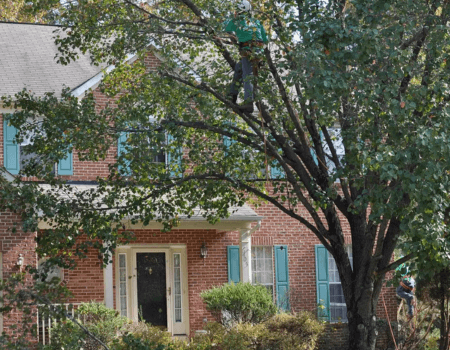
Ed’s Tree Service has worked across Maryland, Washington DC, and Northern Virginia since 1987, and we handle permitting as part of the job rather than leaving it with the homeowner. Homeowners hire us as their Bethesda tree removal company, for jobs in Silver Spring and Rockville, and for work inside the District, and in every case the paperwork is our problem rather than yours. We hold Maryland tree service license #557 and carry full liability and workers’ compensation coverage, with certificates available on request. Request a free estimate, or call 301-937-6269 and one of the owners will answer.
Why Fall Is a Good Season for MD Tree Removal Work
Permits are the main reason to start now, since a roadside tree permit involves a ranger inspection and the calendar does not compress. The season itself also favors the work.
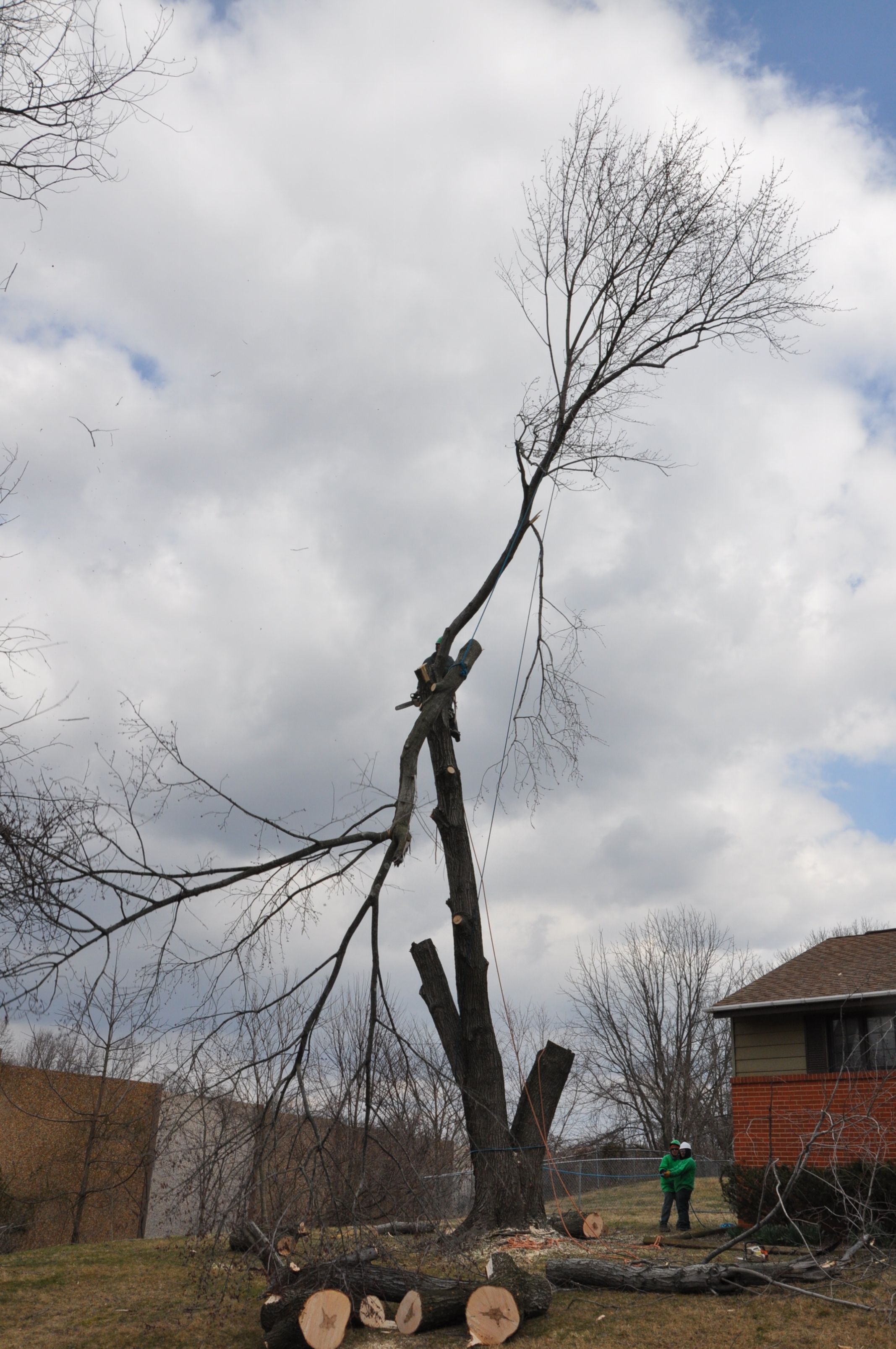
- Leaves down means less material. A dormant deciduous tree carries far less weight and volume than the same tree in August. Rigging is cleaner, there is less debris, and the job usually moves faster.
- Structure is visible. With the canopy bare, the crew can see every union, crack, and dead section before anyone leaves the ground. That matters for planning the drop.
- Less collateral damage. Perennials and shrubs beneath the tree are entering dormancy, so equipment and falling wood do less lasting harm than the same work in May.
- Firmer ground than spring. Autumn soils in this region are typically drier than the saturated ground of March and April, which means less rutting from equipment.
- Ahead of ice and wind. A structurally compromised tree is far better dealt with on a scheduled Tuesday than at 2am during a storm.
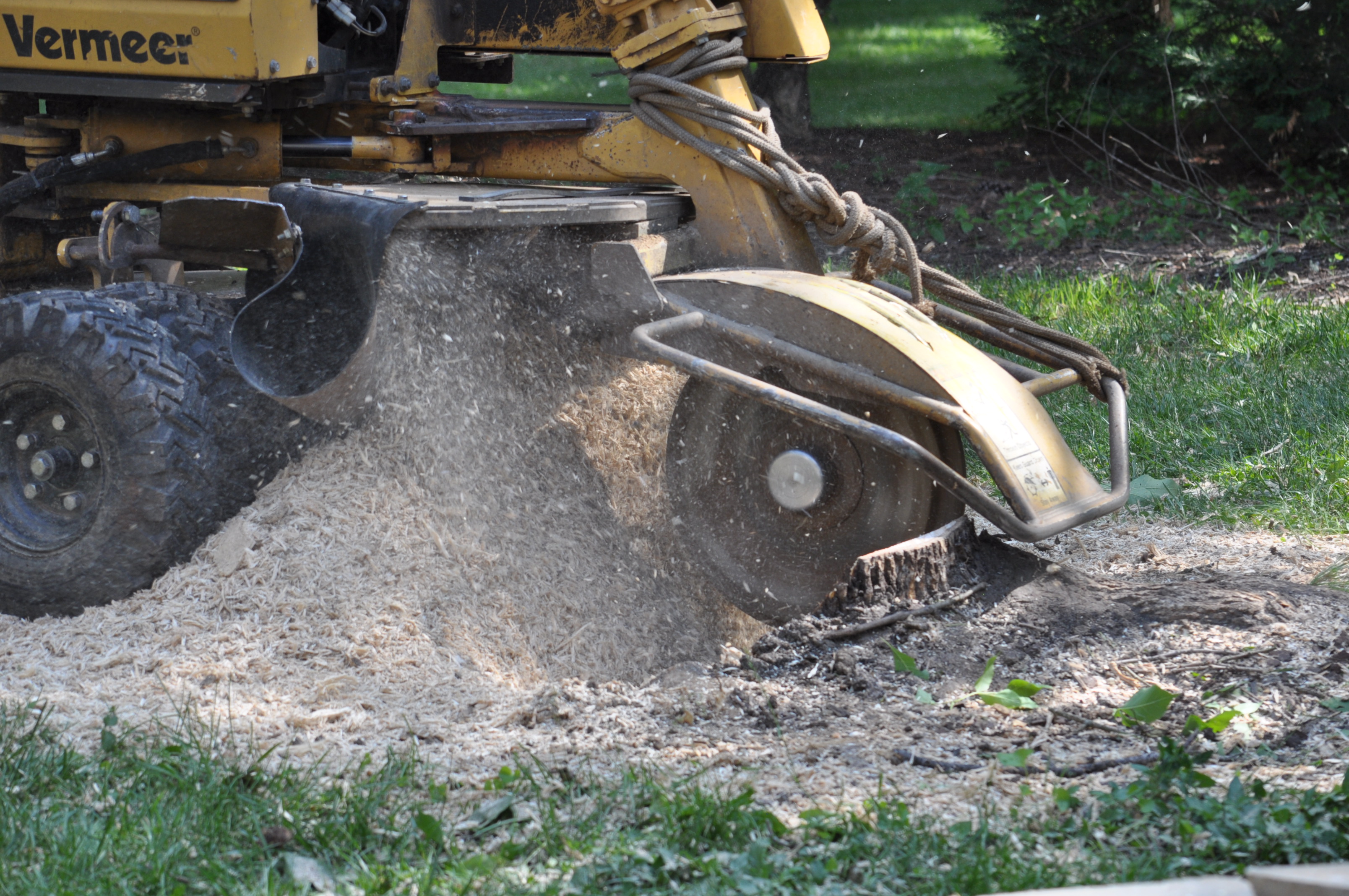
If the removal leaves a stump you want gone, that is worth combining into the same visit. Much of the cost of any tree job is getting equipment and crew to the property, so pairing removal with stump grinding is usually cheaper than two separate trips.
When Tree Removal in Bethesda Is Not the Answer
Not every problem tree needs to come out, and a good estimate should tell you when it does not. The older neighborhoods around Bethesda and Chevy Chase are full of oaks and tulip poplars planted decades ago, and a fair share of the calls we take for a tree removal company in Bethesda end with a pruning recommendation instead.
Limbs over a roof are frequently a pruning question rather than a removal question. Clearance work costs a fraction of a removal and keeps a mature shade tree that is doing real work for the property, including summer cooling and stormwater interception. Deadwood in the interior of an otherwise sound tree is crown cleaning, not cause for removal.
Removal genuinely becomes the recommendation when the structure is compromised beyond repair. Extensive decay at the base, indicated by conks or mushrooms at the root flare. A large split at a codominant union. A new lean with heaving soil. Root loss from construction on a tree too large to compensate. In those cases the tree is going to come down eventually, and choosing when is better than having weather choose.
If you are looking for a safe, professional tree removal in Bethesda, look no further. Contact us and get a free estimate. Our emergency crews are available as well, and we coordinate with insurance carriers and can bill many of them directly.
Key Takeaways
- The strip between sidewalk and street is usually public right-of-way. Trees there are regulated no matter who planted or maintains them.
- Maryland’s Roadside Tree Law requires a DNR permit for any work on right-of-way trees, and commercial work must be directed by a Licensed Tree Expert.
- Montgomery County requires both the state permit and a county DPS permit for trees along county-maintained roads.
- On Montgomery County private property, permits are generally triggered by disturbance over 5,000 square feet, conservation easements, historic sites, or Champion Tree status. Incorporated municipalities may be stricter.
- A Maryland Licensed Tree Expert can authorize immediate removal of a hazardous tree, with notification to agencies within 14 days.
- Fall favors removal work: less material, visible structure, less damage to plantings below, firmer ground, and completion ahead of ice season.
Frequently Asked Questions
How do I find out if a tree is in the right-of-way or on my property?
Your plat or property survey shows the boundary, and most jurisdictions publish a parcel viewer where you can see property lines against aerial imagery. The right-of-way often extends several feet past the sidewalk toward the house, which surprises people, so the sidewalk is not a reliable boundary marker. If you cannot resolve it, the permitting office can usually tell you, and we check this as part of any estimate near a street.
Do I need a permit to remove a tree in Bethesda?
For most private property removals, no. Bethesda is unincorporated and falls directly under Montgomery County rules, so there is no additional municipal ordinance to satisfy the way there is in Rockville, Takoma Park, or the Chevy Chase villages. A permit becomes necessary if the tree stands in the public right-of-way, if the work disturbs more than 5,000 square feet of canopy or soil, or if the tree sits in a conservation easement, on a historic site, or is a County Champion Tree. Any reputable Bethesda tree removal company should confirm which of those applies before quoting the job, and we check it as part of the estimate.
What happens if a tree is removed without a required permit?
Consequences vary by jurisdiction and include fines, orders to plant replacement trees, and in some cases assessed value based on the size of the tree removed. Large protected trees can carry substantial replacement valuations. Enforcement is generally complaint-driven, which means a neighbor is often how it starts. The permit is nearly always cheaper than the penalty.
Can I remove a dead tree without a permit?
Often yes, but the exemption usually has a process attached rather than being automatic. Montgomery County allows immediate removal of a tree determined hazardous by a Maryland Licensed Tree Expert, with notice to agencies within 14 days. Arlington expedites approval for dead or hazardous trees in Resource Protection Areas. DC handles dead and hazardous trees differently from healthy ones. The common thread is that a qualified professional documents the condition, which is one reason to have the assessment on record before the saw comes out.
Who is responsible if my neighbor’s tree falls on my house?
Generally, damage from a healthy tree falling in a storm is treated as an act of nature and each owner’s insurance handles their own property. Liability can shift if the tree was visibly dead or hazardous and the owner was notified and did nothing, because that establishes negligence. This is why written notice matters if you are worried about a neighbor’s tree. Rules differ across Maryland, DC, and Virginia and turn on specific facts, so consult an attorney rather than relying on general guidance.
How long does the permit process take?
It varies by jurisdiction and season. A Maryland roadside tree permit includes an on-site Forest Ranger inspection, so plan on weeks rather than days. DC Special Tree permits go through the TOPS system with its own review period. Private property removals in Arlington and Fairfax that need no permit can be scheduled as soon as the calendar allows. If you want a regulated tree down before winter, September and early October is the right time to begin.
Does removing a tree affect my property value?
It depends on the tree. Mature, healthy shade trees generally add value, provide meaningful summer cooling, and are frequently noted by buyers. A declining or hazardous tree close to the house has the opposite effect and can complicate a sale or an inspection. The question is rarely tree versus no tree. It is usually whether this specific tree, in this specific condition and location, is an asset or a liability, and that is what an assessment is for.
Glossary
Each term links to a general reference if you want to read further.
Canopy
The leafy upper portion of a tree formed by its branches and foliage.
Circumference versus diameter
Circumference is the distance around a trunk, measured with a tape wrapped around it. Diameter is the distance through. DC regulates trees by circumference, so a 44 inch Special Tree threshold equals roughly 14 inches of diameter.
Codominant union
The point where a trunk divides into two stems of similar size with neither dominant. When bark is trapped inside the union, the attachment is weak and prone to splitting.
Conk
The shelf-like fruiting body of a wood-decay fungus on a trunk or limb. Its presence means decay is already established inside the wood.
Dormancy
The period when a tree suspends visible above-ground growth for winter. Removal work during dormancy does less damage to surrounding plantings.
Heritage Tree
In Washington DC, a tree measuring 100 inches or more in circumference. Heritage trees in healthy condition cannot be removed.
Licensed Tree Expert
A professional licensed by the Maryland Department of Natural Resources to perform and direct tree care work in the state. Required for commercial roadside tree work and able to authorize removal of a hazardous tree.
Root flare
The widened area where a trunk broadens into its main structural roots. It should be visible at the soil surface, and it is where basal decay tends to show first.