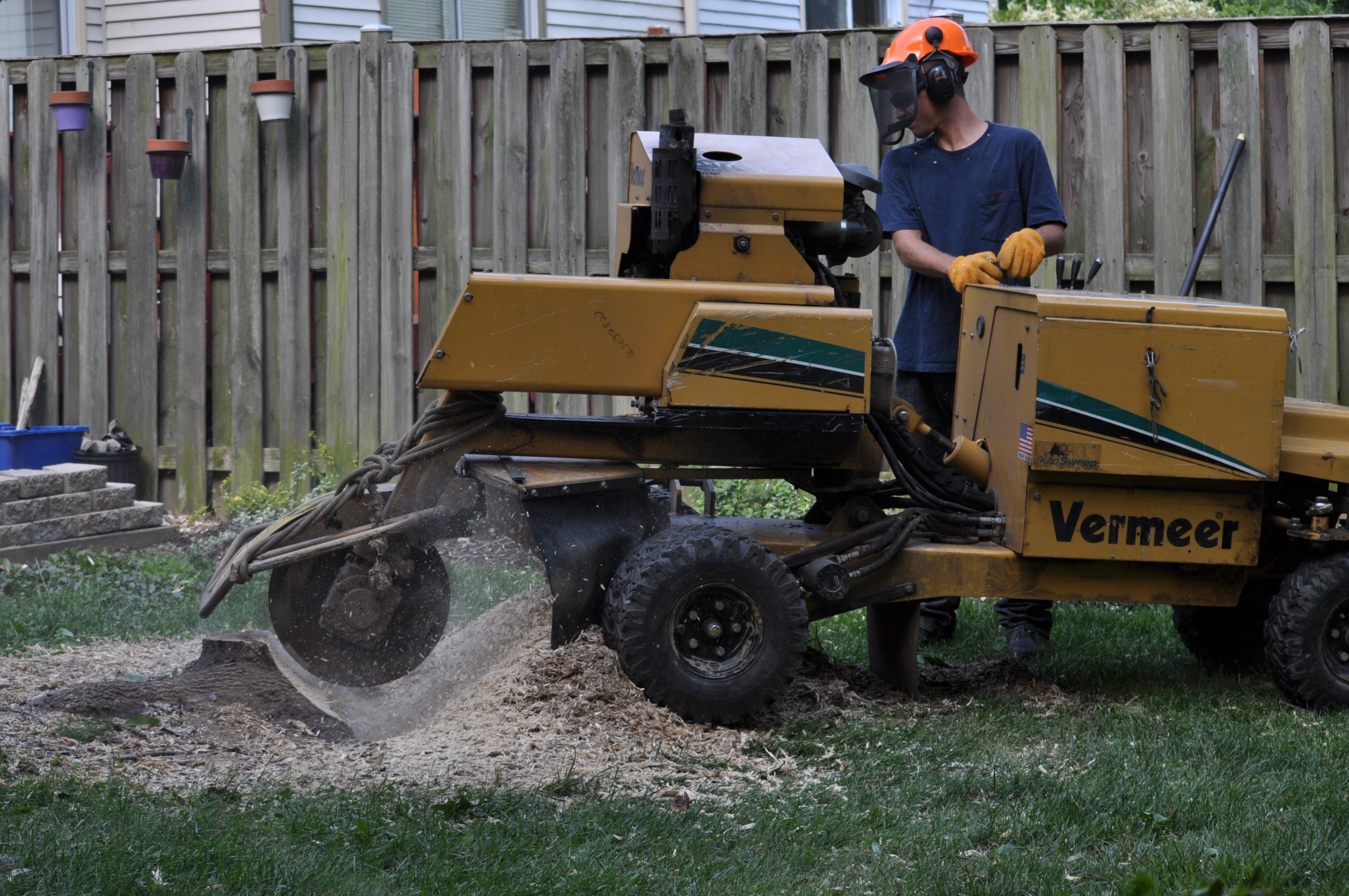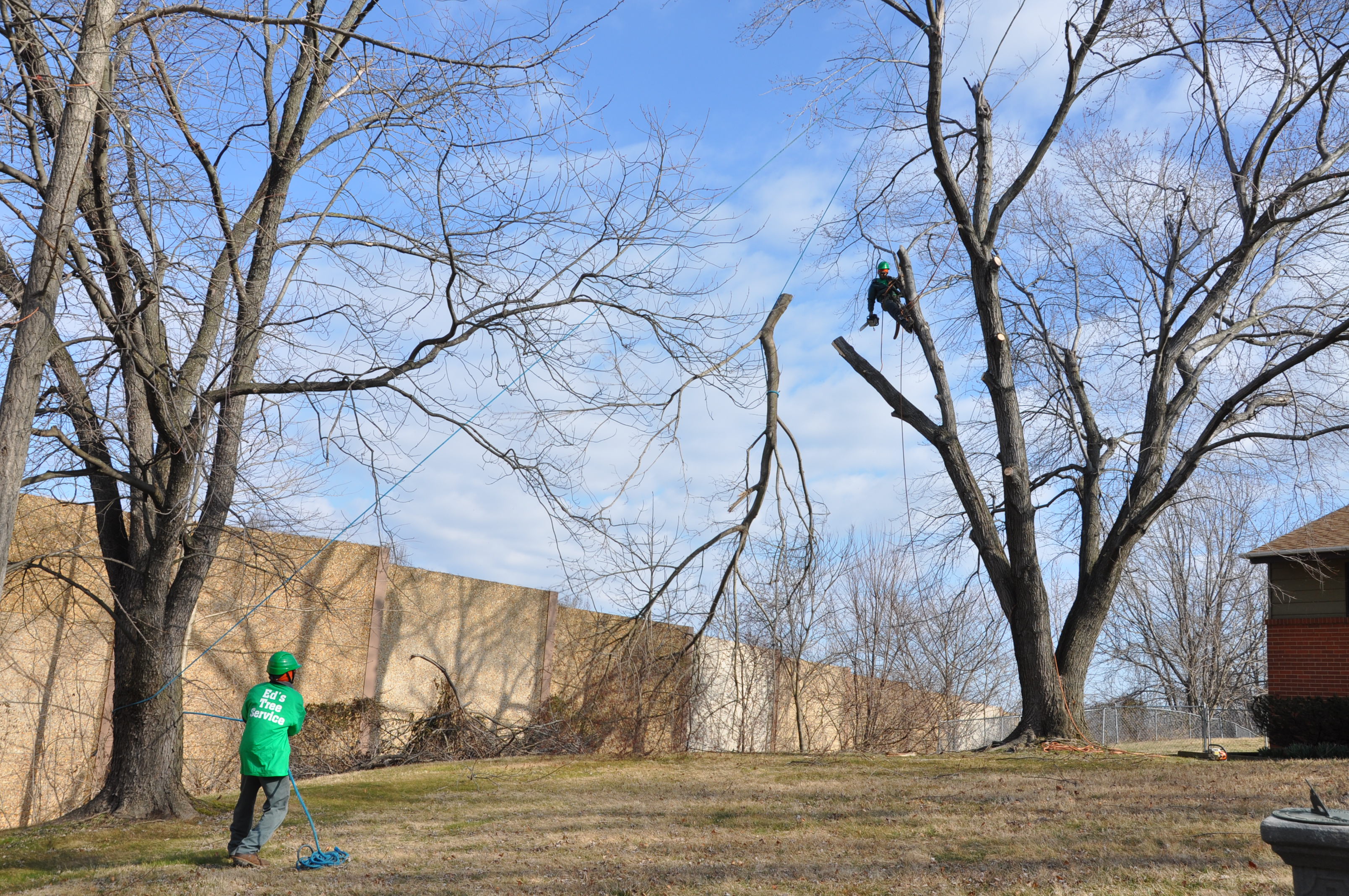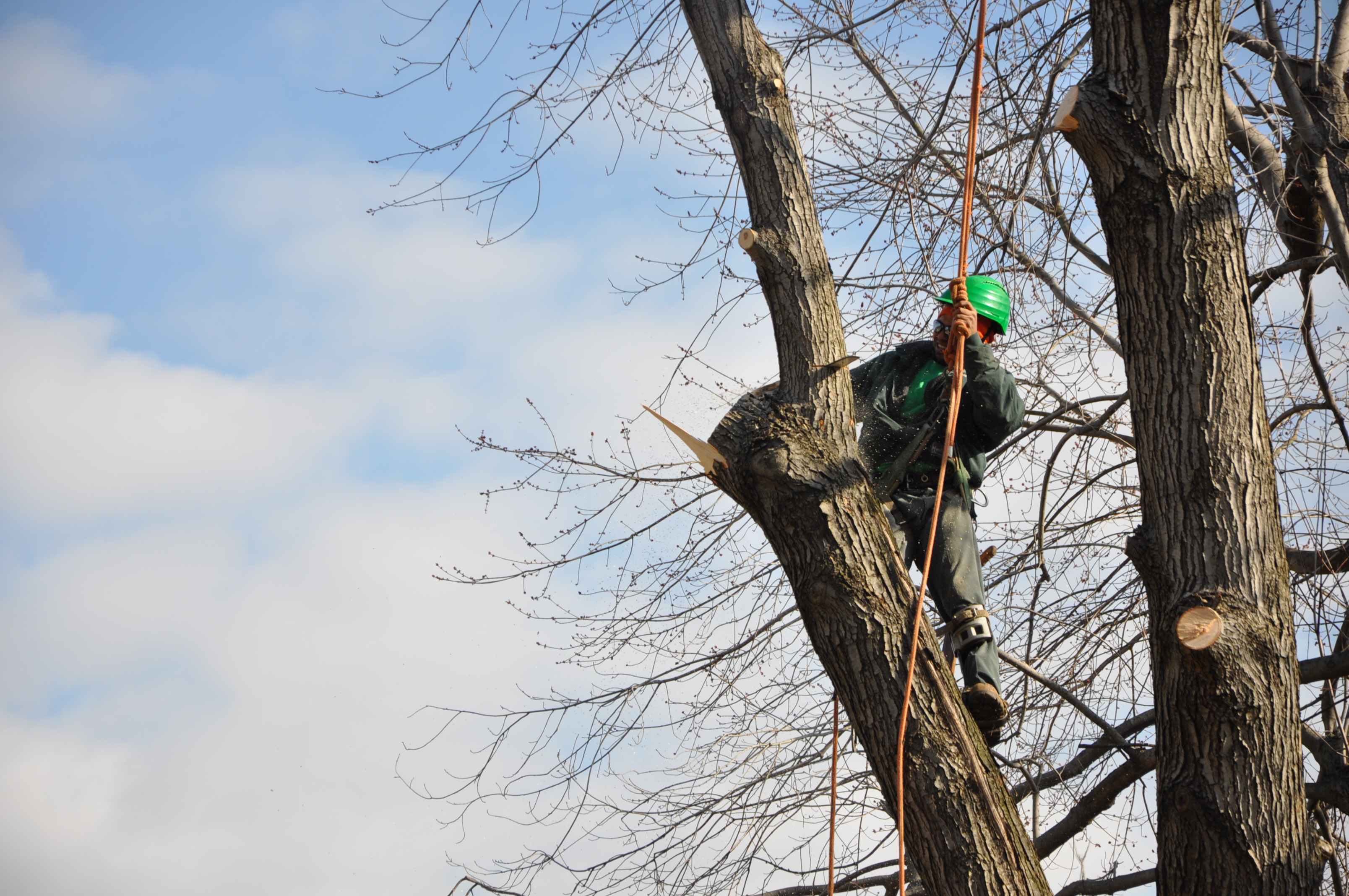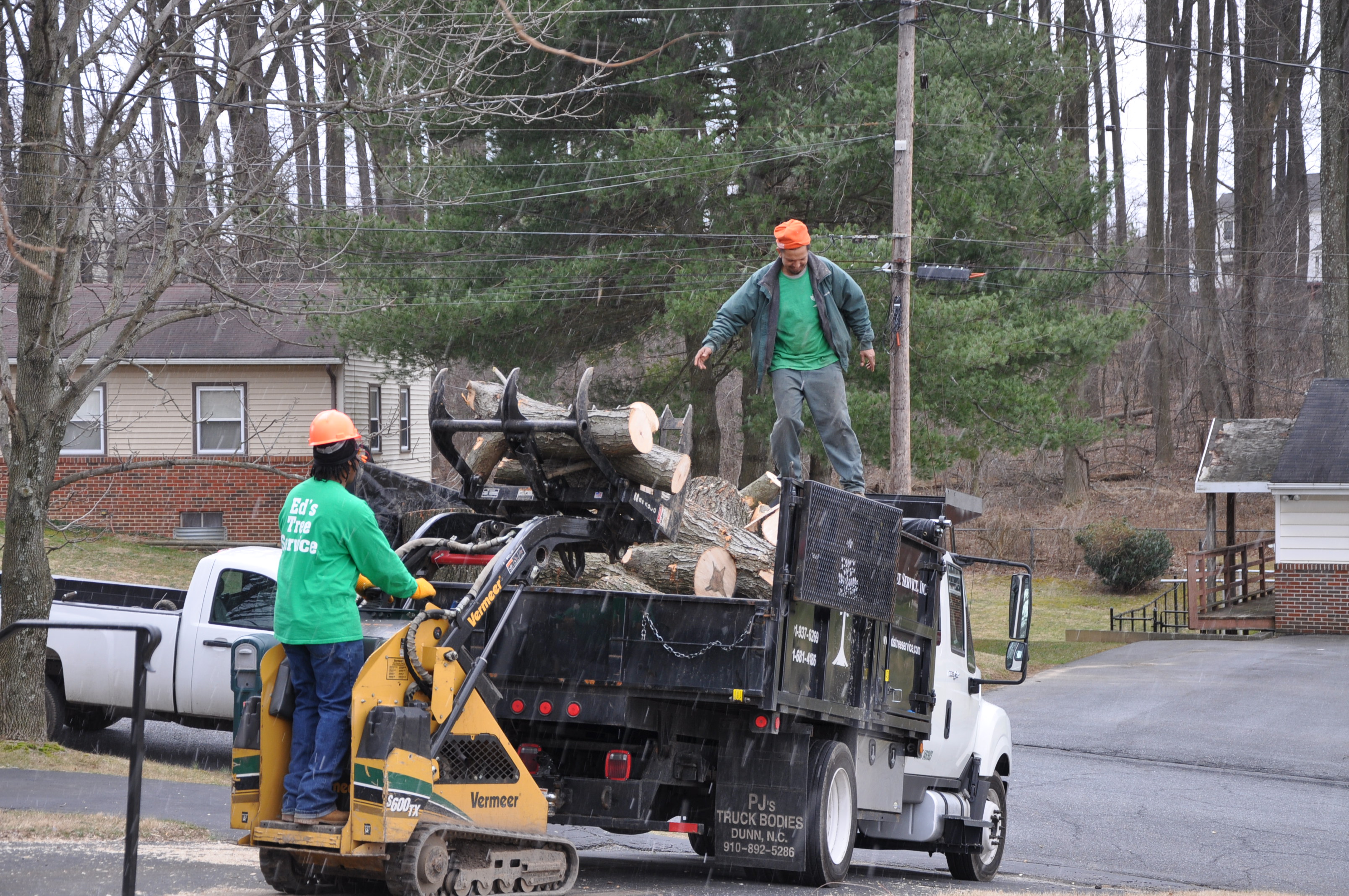
There is a short stretch of the year when a dead limb is impossible to miss, and we are in it right now.
It’s often difficult to gauge when a tree removal in Maryland is due. While the canopy is still full, a dead branch stands out as a bare grey line against everything green around it. You can pick it out from the driveway. Come January every branch on the tree is bare, and telling a dead limb from a dormant one means looking at bark texture and bud condition through binoculars. The easy version of this inspection is available for another six or eight weeks.
That timing is worth using, because the dead wood you find now is wood that will be carrying ice in a couple of months. Here is what to look for from the ground, and when you need to worry about an emergency tree removal in MD.
Why This Year is Important for Emergency Tree Removal in Maryland
The 2026 growing season was hard on trees across the region. By the middle of July roughly 48 percent of the Mid-Atlantic was abnormally dry or in drought, temperatures ran well above normal, and groundwater sat below normal through Virginia and much of the coastal plain, according to the regional drought status update.
Trees respond to that kind of season by shedding what they cannot support. Branch tips die back, interior limbs that were already marginal give up, and the results become visible in late summer. A tree that looked fine last September may be carrying noticeably more dead wood this year.
Seven Things to Look For From the Ground
You do not need to climb anything or own special equipment. Walk the perimeter of each mature tree, look up, then look at the base. University of Florida Extension organizes the visible warning signs into roughly these categories, and they translate directly to our region.
1. Dead branches. Look for limbs with no foliage while the rest of the canopy is full, loose or missing bark, and a coarse, stubby silhouette. Size and height are what matter. A dead twig is housekeeping. A dead limb six inches across and forty feet up, positioned over a driveway or a roof, is the one to deal with.
2. Broken or hanging limbs. Anything already detached and caught in the canopy has failed once and is held up by nothing reliable. These are usually left over from summer storms and they do not resolve themselves.
3. Codominant stems with included bark. Where a trunk splits into two stems of similar size, look at the union. A U-shaped junction is generally sound. A tight V, especially with bark pinched down inside it, means included bark and no real connective wood holding the two halves together. These are among the most common failures in ice and wind.
4. Fungal fruiting bodies. Shelf-like conks on the trunk, mushrooms at the base, or clusters emerging from a root flare all indicate that wood decay fungi are established inside wood you cannot see. Fall is peak season for these to appear, which is another reason this is the right month to look.
5. Cavities and old wounds. Holes, hollows, seams, and old flush cuts are entry points where decay got in. A cavity by itself is not a verdict, since trees wall off damage through compartmentalization. What matters is how much sound wood remains around it, which usually takes a professional to judge.
6. Lean. A tree that has leaned the same way for thirty years and has grown to compensate is generally not the problem. A new or increasing lean is, particularly with cracked or heaving soil on the opposite side of the trunk. That combination suggests roots are letting go and it warrants attention promptly rather than eventually.
7. Root and base problems. Look for mushrooms at the base, damaged or severed roots from recent construction or trenching, and a trunk that goes into the ground like a fence post with no visible root flare. Thinning in the upper canopy often traces back to something happening underground.
Extension guidance is honest that there are no fixed rules a homeowner can apply to convert these observations into a decision. What each defect means depends on its extent, the species, and what the tree would hit. The value of the walk is knowing what to ask about.
Why Dead Wood Matters in a Maryland Emergency Tree Removal
A dead limb is a static load in September. In an ice storm it is a lever.
NC State Extension describes the mechanism plainly. Snow and ice add substantial weight to limbs, wind applies lateral force at the same time, and trees with existing defects fail first. Included bark unions, cavities, poor root systems, and old topping wounds are the failure points. Dead wood has no flexibility and no capacity to respond, so it breaks where living wood bends.
The practical recommendation from that guidance is specific: remove dead and diseased limbs within reach of structures before storm season. Not the whole tree, not a heavy pruning, just the wood that has already died.
The Best Time For A Tree Removal in Maryland? Always.
Most tree work has a preferred window. Deadwood removal does not.
Virginia Cooperative Extension confirms that dead and diseased branches may be removed at any time of year, with cuts made into healthy wood below the affected area and tools sterilized between cuts to avoid moving pathogens. Dead tissue is not participating in the tree’s annual cycle, so taking it out carries none of the timing concerns that apply to live wood.
The same holds for anything that has already failed. Hanging limbs, split unions, and branches resting on a roof or a service line are addressed when they are found. A cracked limb over a driveway in Silver Spring does not get safer by waiting for a better month.
So the inspection you do this week converts directly into work that can be scheduled this month. Crown cleaning, which is the removal of dead, dying, diseased, and crossing branches, is the most common operation we perform and often the only thing a healthy mature tree needs.
What Not to Do Yourself
The inspection is a homeowner job. Leave the professional tree removal job to us!
University of Maryland Extension puts it directly: pruning large trees and any work requiring climbing or near power lines is dangerous and should be handled by a licensed tree expert or certified arborist. Chainsaw work on a ladder accounts for a grim share of serious homeowner injuries every year, and a dead limb is unpredictable about where it goes when it separates.
Two more things worth avoiding, both of which show up regularly on properties we visit:
- Do not have the tree topped. Topping cuts limbs at arbitrary points, destroys the tree’s structure, opens large wounds to decay, and generates dense weakly attached regrowth. A topped tree is more hazardous in five years than it was before the work, not less.
- Do not paint the cuts. Wound dressings do not prevent decay and do not speed closure.
If a tree or large limb has already come down across a driveway, a roof, or a power service, that is an emergency rather than a scheduling question. Our crews are available to contact, and we coordinate with insurance carriers and can bill many of them directly for emergency tree removal in Maryland.
Key Takeaways
- Late summer and early fall is the easiest time of year to spot dead limbs, because they stand out against a full canopy. That advantage disappears once the leaves drop.
- The dry 2026 season left more dieback than usual across the region, so this year’s walk is worth doing rather than skipping.
- Seven visible warning signs: dead branches, hanging limbs, codominant stems with included bark, fungal conks and mushrooms, cavities, new lean, and root or base problems.
- Large dead limbs positioned over a structure, drive, or walkway are the priority. Dead wood in the interior of a tree with nothing beneath it often needs nothing.
- Ice adds weight and wind adds lateral force. Existing defects are where trees fail, and dead wood breaks rather than bends.
- Deadwood and hazard removal carry no seasonal restriction and can be scheduled any time, unlike structural pruning of live wood.
- A new or increasing lean with soil heaving at the base warrants prompt assessment.
- Leave climbing, chainsaw work, and anything near power lines to a licensed tree expert. Never top a tree and never paint the cuts.
Frequently Asked Questions
How can I tell if a whole tree is dead or just stressed?
While leaves are still on, canopy coverage tells you most of it. Scratch a small twig with a thumbnail: green and moist underneath means living tissue, brown and dry means that twig is gone. Check several twigs at different heights, because one dead branch is not a dead tree. A tree with a thin canopy, dieback concentrated at the branch tips, and sprouts coming off the trunk is stressed and worth assessing. A tree with no leaves at all in September is almost certainly dead.
Are mushrooms growing at the base of my tree a serious problem?
They deserve a look. Mushrooms and shelf conks are the fruiting bodies of fungi already established inside the wood, so by the time you see them the decay has been underway for a while. Some species are mild and some destroy structural roots or hollow the lower trunk. What matters is how much sound wood remains, which cannot be judged from the outside. If they are appearing on the trunk or at the root flare of a large tree near a house, have it assessed.
My neighbor has a dead tree leaning toward my house. What can I do?
Start with a conversation, since most people do not know the tree is dead. If that goes nowhere, notify them in writing and keep a copy, because documented notice generally matters for liability if the tree later causes damage. Photograph the tree’s condition. You may trim branches that cross onto your property, but you cannot enter their land or remove their tree. Local ordinances vary across Maryland, DC, and Virginia jurisdictions, and for anything involving liability you want an attorney rather than general guidance.
How often should mature trees be inspected?
Once a year is a sensible rhythm for a homeowner walk, and late summer is a good time for it. Add a look after any significant storm, since fresh cracks and hanging limbs happen then. Trees close to a house, over a driveway, or near a play area justify closer attention than trees at the back of a wooded lot. A professional assessment makes sense when your walk turns up something you cannot interpret, or every few years for large trees near structures.
Will removing dead limbs hurt the tree?
No. Dead wood contributes nothing to the tree, so removing it costs the tree no energy. This is what separates deadwood removal from live pruning, where every branch taken is photosynthetic capacity lost and the timing and volume matter. Crown cleaning can be done on a stressed tree that should not have live wood removed at all, which is often exactly the right call after a dry season.
Does homeowners insurance cover removing a hazardous tree?
Generally not while it is standing. Most policies cover removal after a tree has fallen and caused damage, and often only when it hits a covered structure. Preventive removal of a tree that is merely dead or declining is typically the owner’s expense. That is worth weighing against the cost of the removal, because a tree that comes down on its own may take a roof or a fence with it. Policies differ, so read yours or ask your agent. We do coordinate with carriers and can bill many of them directly on storm damage claims.
Glossary
Each term links to a general reference if you want to read further.
Canopy
The leafy upper portion of a tree formed by its branches and foliage.
Codominant stems
Two or more stems of similar diameter arising from the same point on a trunk, with neither clearly dominant. These unions are weaker than a single leader with subordinate branches.
Compartmentalization
The process by which a tree walls off a wound with chemical and physical boundaries to limit the spread of decay. Trees do not heal wounds, they contain them.
Conk
The shelf-like fruiting body of a wood-decay fungus growing on a trunk or limb. Its presence indicates decay already established inside the wood.
Included bark
Bark trapped between two stems as they grow together, preventing strong connective wood from forming. A frequent cause of splitting at codominant unions under ice and wind load.
Root flare
The widened area where the trunk broadens into the main structural roots. It should be visible at the soil surface. A trunk entering the ground like a post is buried or planted too deeply.
Topping
Cutting large limbs back to arbitrary points without regard to structure. It destroys a tree’s architecture, opens large wounds to decay, and produces weakly attached regrowth. Not an accepted arboricultural practice.
Tree risk assessment
A structured evaluation by a qualified arborist of how likely a tree or part of it is to fail, what it would strike, and the consequences of that failure.
Wood decay fungi
Fungi that break down the woody tissue of living and dead trees, reducing structural strength from the inside. Conks and mushrooms are their visible fruiting bodies.