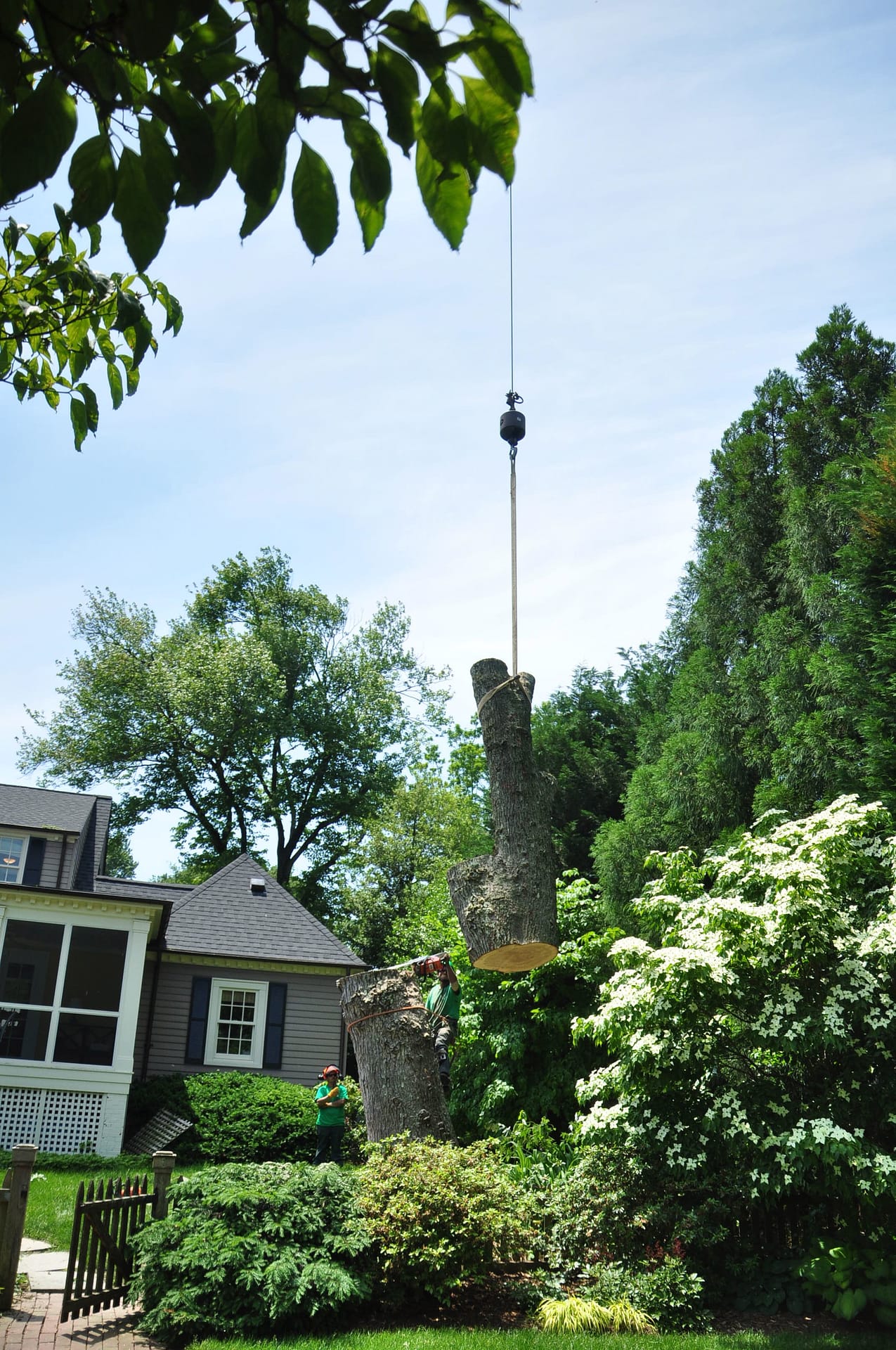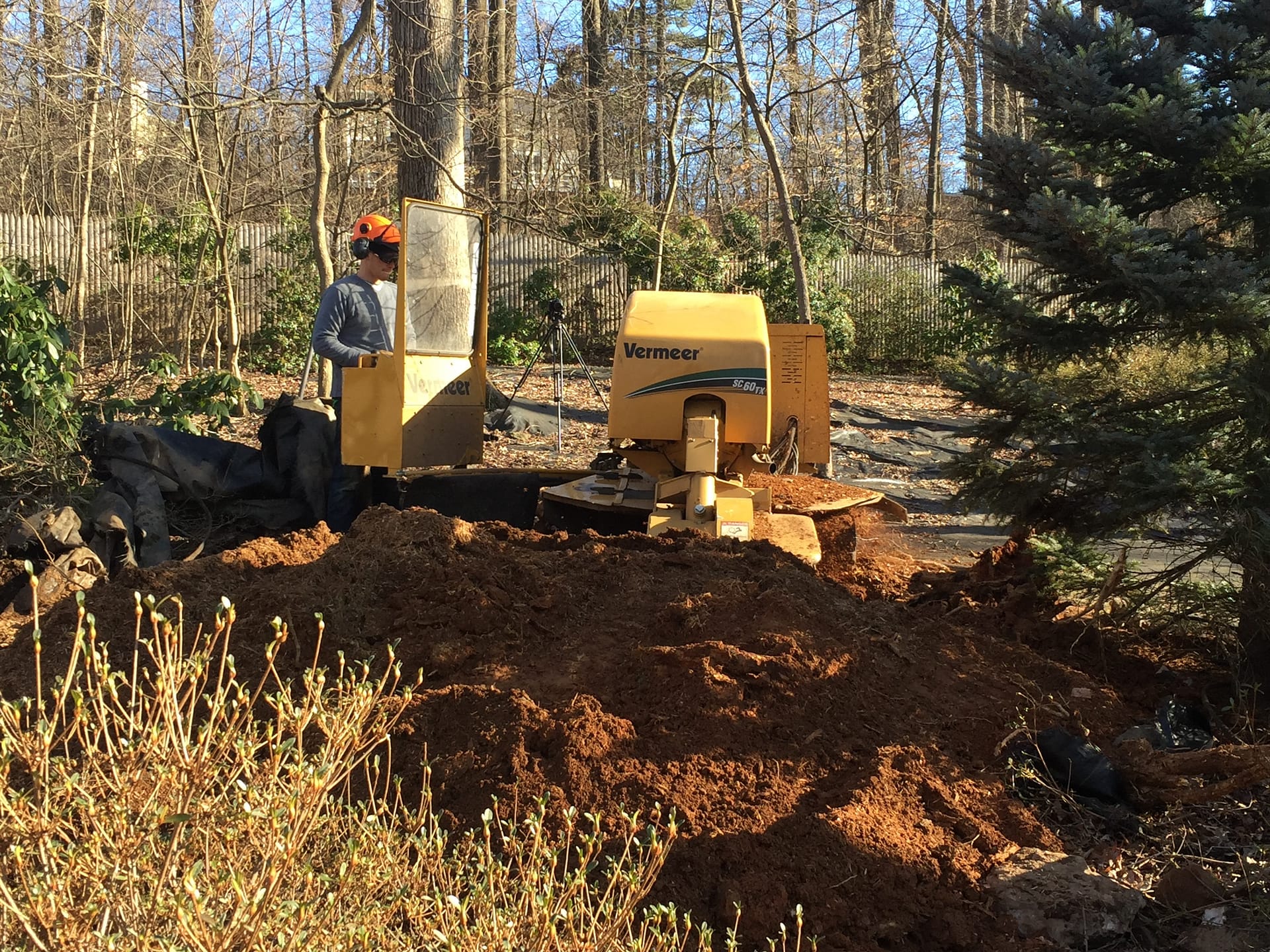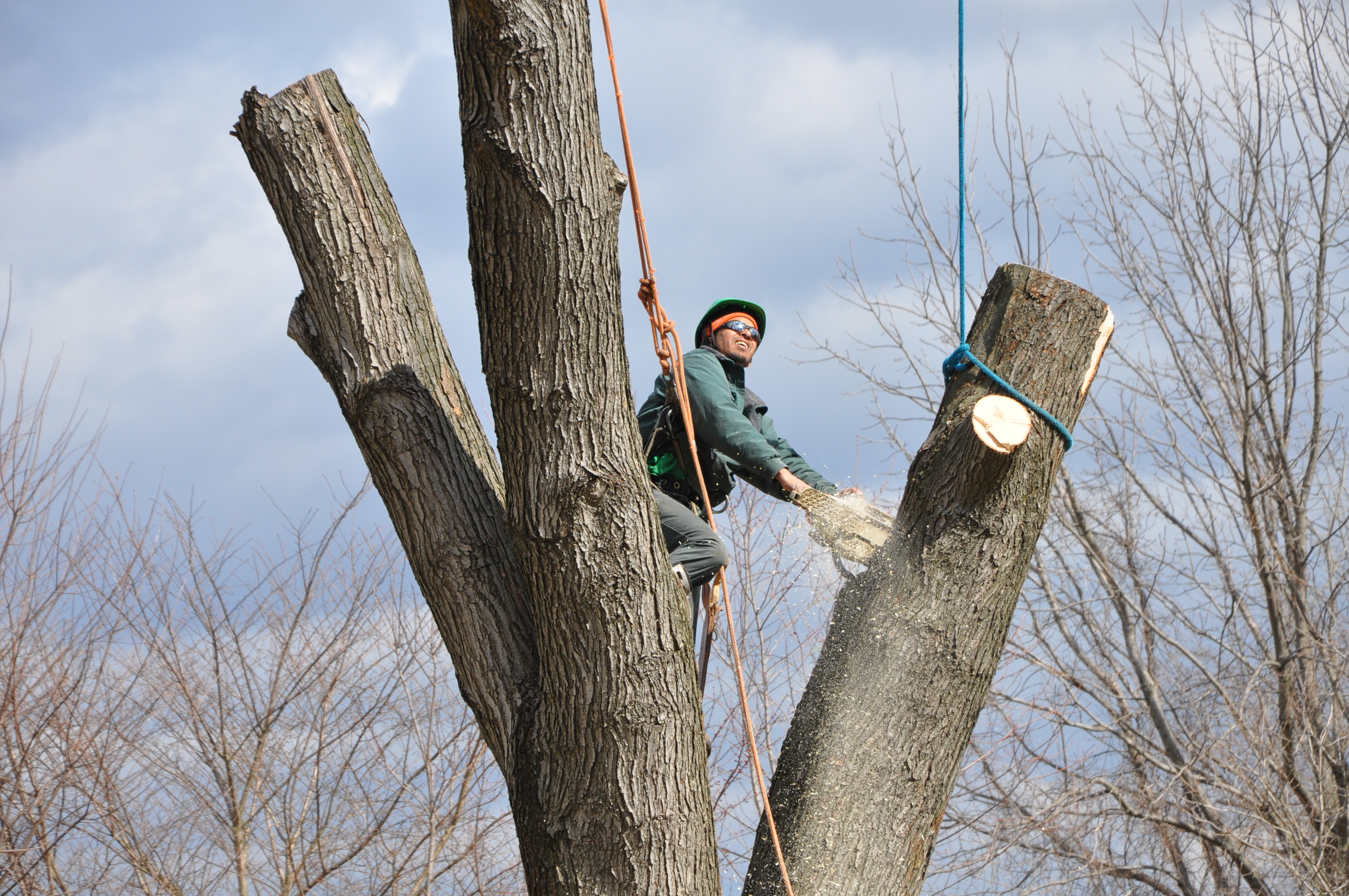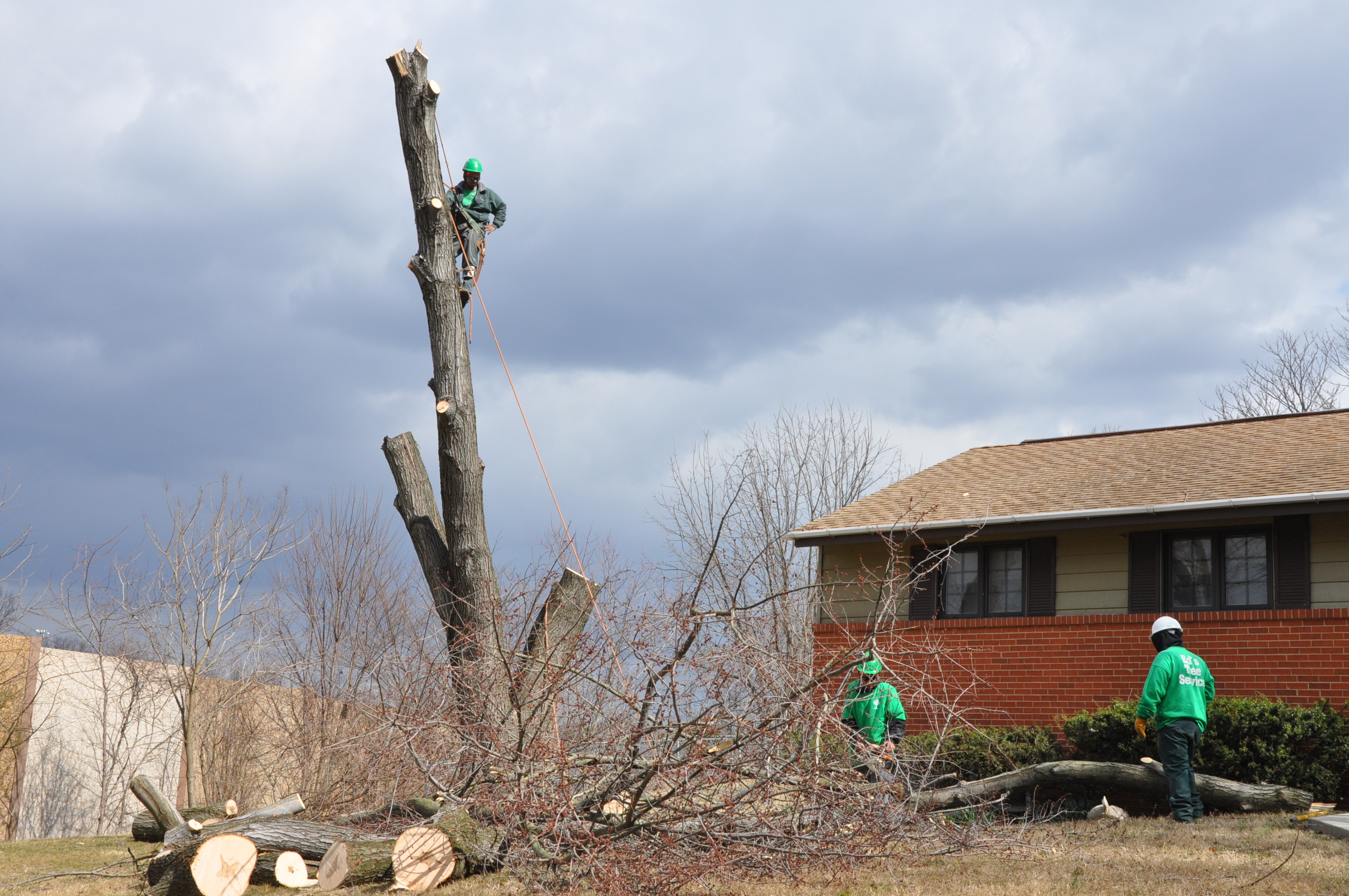
A dead tree on your property is not just an eyesore. It is an active liability. Dead wood loses its structural integrity over time, and without warning, a failing tree can drop limbs or come down entirely onto your house, car, fence, or a neighbor’s yard. Removing a dead tree before it falls almost always costs less than repairing the damage after it does.
Dead Trees Don’t Wait: Why Timing Matters for Tree Removal in MD
Most people picture a dead tree as something that stands for years before it becomes a real problem. In reality, the timeline is shorter than you might expect. Once a tree dies, the wood begins to decay from the inside out. Root systems that once anchored it start to break down. A tree that looks solid from the outside may already be hollow or severely weakened where you cannot see it.
Weather speeds things up. Wind, ice storms, and heavy rain all put stress on weakened wood. Maryland is no stranger to sudden storms, and those are exactly the conditions when dead trees fail.
Warning Signs Your Tree May Be Dead or Dying
According to the International Society of Arboriculture, even a healthy-looking tree may fail if it has poor branch architecture, was improperly pruned, or has unseen internal decay or root failure. A tree showing two or more of these at once deserves a closer look from a MD tree care professional:
- Branches that snap cleanly without bending, with no green inside when scratched
- Bark falling away in large sections or peeling without new growth underneath
- Fungal growth such as mushrooms or shelf fungi at the base or along the trunk
- Visible cracks or splits running along the main stem
- A lean that has developed or noticeably worsened over a short period
- No new leaf growth when surrounding trees are leafing out
- Soft, spongy, or crumbling wood if you press on exposed areas
What a Falling Tree Can Actually Cost You
A falling tree or large limb can cause roof damage, crushed vehicles, downed power lines, fence destruction, and damage to neighboring properties. In serious cases, a heavy trunk falling close to the house can crack a foundation.
One thing homeowners do not always think about is what happens if the tree lands on a neighbor’s property. As Progressive notes, if your neighbor’s insurance company determines that your tree fell due to neglect, you may be held responsible for the resulting damage. Proactive removal happens on your schedule and at a predictable cost. Waiting means the tree decides when and how it comes down.
What to Know About Maryland Tree Removal Permits Before You Schedule Anything
According to the Maryland DNR Forest Service, Maryland’s Roadside Tree Law requires a Tree Care Permit before any tree work, including removal, is performed on a tree growing within a public road right-of-way. Failing to obtain the required permit can result in fines or other penalties.
For trees on private property, permit requirements vary by county. As Prince George’s County guidance makes clear, removing more than one tree or clearing more than 5,000 square feet may require additional approvals. A reputable tree service familiar with Maryland tree removal regulations should be able to flag any permitting requirements upfront.
Why Hiring an Insured MD Tree Removal Service Near You Matters More Than Price
According to the Montgomery County Department of Environmental Protection, Maryland law requires that anyone being paid to work on, evaluate, or give advice about trees hold a valid Licensed Tree Expert credential through the Maryland DNR Forest Service. That requirement exists for good reason. If a crew causes additional damage during removal, or if someone is injured on your property, you want to know that proper coverage is in place.
Before hiring anyone, ask for proof of liability insurance and workers’ compensation coverage, and make sure you receive a written estimate before work begins.
What to ask before you hire:
- Are you licensed and insured in this state?
- Can you provide proof of liability and workers’ comp coverage?
- Will you provide a written estimate before work starts?
Get a Free Estimate From Ed’s Tree Service
We provide tree removal, stump removal, fertilization, trimming and pruning services to homeowners across Northern Virginia, Maryland, and DC. If you need help right away, visit our emergency tree removal service page.
Contact Ed’s Tree Service for an honest assessment and upfront pricing.
Key Takeaways
- Dead trees decay faster than they appear to from the outside
- Warning signs include brittle branches, missing bark, fungal growth, trunk cracks, and new lean
- A dead tree falling on a neighbor’s property can create liability for you
- Always verify insurance coverage and get a written estimate before any work begins
Frequently Asked Questions
How do I know if a dead tree is dangerous?
Signs of immediate concern include visible trunk decay, a lean that has developed recently, large dead limbs hanging over structures, and root damage or soil heaving near the base. The International Society of Arboriculture notes that internal decay and root failure are not always visible from outside the tree, which is why a professional assessment is the most reliable way to evaluate risk.
Is tree removal in Maryland regulated?
Yes. Maryland’s Roadside Tree Law requires a permit from the Maryland DNR Forest Service before any work is done on a tree in a public road right-of-way. Requirements for trees on private property vary by county. Check with your county planning or forestry office, or ask your tree service provider before scheduling work.
What happens if my dead tree falls on my neighbor’s property?
If your tree was visibly dead and you knew about it, your neighbor’s insurance company may look to you to cover the damage. Every situation is different, but documented neglect tends to make these conversations harder. Getting the tree removed before it falls is the simplest way to avoid the question entirely.
Sources
- International Society of Arboriculture, Tree Risk Assessment Qualification
- Insurance Information Institute, If a Tree Falls on Your House, Are You Covered
- Maryland DNR Forest Service, Roadside Tree Program
- Prince George’s County, Tree Permitting FAQ
- Montgomery County DEP, Tree Permits and Removal
- Progressive, Does Home Insurance Cover Fallen Trees